
Listening, Rhythm, and the Cape Breton Fiddle Tradition: Conversations with Stan Chapman
The influential fiddle teacher, whose students have included Natalie MacMaster and Ashley MacIsaac, reflects on rhythm, repertoire, and keeping the music grounded in tradition.
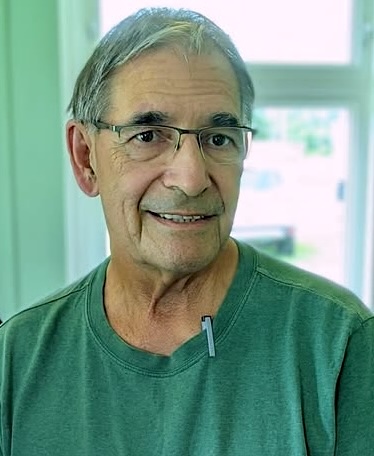
Photo by Jane Smarzik
Across conversations at Colaisde na Gàidhlig / Gaelic College on Cape Breton Island over two recent summers, Stan Chapman reflected on learning, teaching, and the musical values that continue to shape Cape Breton fiddling. He consistently returned to fundamentals: listening, rhythm, timing, and staying connected to the tradition.
For more than four decades, Chapman has influenced generations of Cape Breton fiddlers both on and off the island. His students and former players have carried the music from community halls and dances to festivals and international stages, with many going on to performance careers of their own.
Jerry Holland’s Stan Chapman’s Jig is widely played in Cape Breton and related fiddle traditions. The tune honors a musician whose influence as a teacher, mentor, and tradition bearer has shaped generations of players.
Interview with Stan Chapman
Jody Gunn (JG): Can you start by telling us a little about your background and how you first got into fiddling?
Stan Chapman (SC): My father was a fiddler from the mainland of Nova Scotia, and I started playing around the age of eight, mostly by ear, just listening to him. When I was eleven, I took formal lessons with Vera Campbell in New Glasgow. She taught classical music, but didn’t mind me playing fiddle music as well. I studied with her for about eight years and completed a couple of Royal Conservatory exams.
After high school, I stopped playing for a while, but picked it up again in the early 1970s. My father had played a lot of French Canadian tunes from recordings like Joseph Allard, but after moving to Pictou County he discovered CJFX radio and Cape Breton fiddlers like Winston Fitzgerald and Angus Chisholm. That sparked my interest in Cape Breton music.
I also remember that when I was four, my father got me a ukulele and taught me a few chords so I could accompany him.
JG: How did you begin teaching, and how did that grow?
SC: I started giving private lessons when some friends asked. I went to the first Glendale Festival in 1973 just to listen and record. Later, Margaret Dunn encouraged me to start a fiddle class in Antigonish, around 1974 or ’75.
That grew quickly. Some people came to my home for lessons, others traveled from Cape Breton. Eventually I taught in different parts of Cape Breton as well.
JG: Coming from mainland Nova Scotia rather than Cape Breton itself, did you encounter any resistance when you began teaching on the island?
SC: Surprisingly, no. I credit Margaret Dunn for that. I taught mostly from written music at the time, but I also had a deep appreciation for the style. I did my best to play in the Cape Breton style, though it’s never quite the same as being born into it. Still, I listened to a lot of recordings, and that helped.
JG: How would you describe Cape Breton fiddle music to someone unfamiliar with it?
SC: It’s very rhythmic, built for dancing. The bowing is fairly straightforward, with a lot of single bows and a strong drive. Compared to Irish fiddling, it’s not as slurred. There’s also a connection to piping and Gaelic song. Some of the ornamentation may even have roots in Baroque music.
JG: What matters most to you when you hear someone else play?
SC: Rhythm, definitely. I like to hear someone play at a relaxed tempo but still include ornamentation. Willie Kennedy was a good example. When he played alone, it was very textured, but if there was a dancer, he would adjust the tempo. You could always tell when he was playing for a dancer.
JG: In your teaching, what do you emphasize most?
SC: Timing. Let’s say you have 16 bars in a tune. You start on the first beat, and you should end on the last beat at the right time. You don’t want to slow down, speed up, or add beats.
If you make a mistake, just carry on. Don’t repeat the note and disrupt the timing.
JG: Timing takes priority, even over correct notes?
SC: Yes, I think so. For me, anyway. And that applies to any kind of music.
JG: What advice would you give someone learning this music, especially if they didn’t grow up with it?
SC: Listen. Listen a lot. If you’re interested, you’ll be drawn to the sound. There are so many recordings now.
Many of my students had grown up hearing this music. They listened to tapes and records, so they already had the sound in their heads, which is essential.
JG: How do you approach teaching in different settings?
SC: It depends. At fiddle camps, we often teach by ear and give out the sheet music later. At Gaelic College, students usually have the written music from the start. I try to encourage listening and breaking tunes into phrases.
For more advanced players, we talk about bowing, grace notes, and style.
JG: You’ve taught many well-known players. What has it been like watching them succeed?
SC: It’s been wonderful. Natalie [MacMaster], for example, went to teacher’s college. She never set out to have a music career. She once said all she wanted was to play a square set in West Mabou.
Ashley MacIsaac played left-handed on a right-handed fiddle, and I encouraged him to continue because he sounded good.
It’s also rewarding to see students who may not have had as much natural ability but worked very hard and became fine players. Determination goes a long way.
JG: You’re known for being very supportive as a teacher. Is that intentional?
SC: I try not to be overly rigid. There’s a lot of individuality in fiddle playing. As long as the sound is good and the player is comfortable, I’m not too concerned if their technique isn’t exactly standard.
JG: How has your own playing evolved over time?
SC: I used to get nervous and play too fast. Now I’m more relaxed and probably slower. My classical training helped with tone and intonation. I tend to favor airs and jigs. Strathspeys and reels have always been more challenging for me.
JG: Have you had to adapt your playing in recent years?
SC: Yes. I have some arthritis, so there are certain keys I can’t play as well anymore. I can’t play long sets the way I used to.
But I can still teach, because I don’t have to play constantly. I also choose tunes that avoid certain fingerings, like using the fourth finger on the E string.
JG: Any advice related to that, or more generally?
SC: If you’re going to do something, do it. Don’t wait. I have no regrets. I’m doing okay, and I’m not complaining.
JG: How do you think new compositions fit within the Cape Breton tradition?
SC: I think there’s a place for them. If someone composes a tune and plays it in public, it’s more likely to be accepted.
I haven’t composed many tunes myself, and I don’t usually play them in public.
JG: What is your process when you do compose?
SC: I might come up with a phrase and try to add another. If I don’t record it, I forget it. I have several unfinished tunes.
I sometimes share them with Paul Cranford, who can check if they’re too similar to existing tunes. There are only so many notes, so similarities happen.
JG: Do you see the tradition as open to new material?
SC: Yes, I think so. But I still like to go back to the older tunes.
JG: What do you see in younger players who are carrying the tradition forward?
SC: Many are very conscious of the tradition. They go back to older tunes and sources.
At the same time, they add new ideas. You don’t want to get too far away from the tradition, in my opinion.
JG: How has Cape Breton fiddle music changed over your lifetime?
SC: It’s grown enormously. There was a revival in the 1970s, and later groups like the Rankin Family and Barra MacNeils brought it to wider audiences. There was a bit of a lull in the early 2000s, but now there are many young players again. Dances are full, and family dances are helping bring in the next generation.
JG: Are you optimistic about its future?
SC: Right now, yes. But traditions can be lost quickly if there’s no one to carry them forward. Interest is crucial, especially among young people.
JG: What are you most proud of?
SC: Seeing new players, especially young ones. I remember hearing a 15-year-old playing Arthur Muise tunes and thinking, “That’s not Arthur, but it sure sounds like him.” Moments like that are the most rewarding part.
Read more about Stan Chapman here.
Listening, Rhythm, and the Cape Breton Fiddle Tradition: Conversations with Stan Chapman
The influential fiddle teacher, whose students have included Natalie MacMaster and Ashley MacIsaac, reflects on rhythm, repertoire, and keeping the music grounded in tradition.