
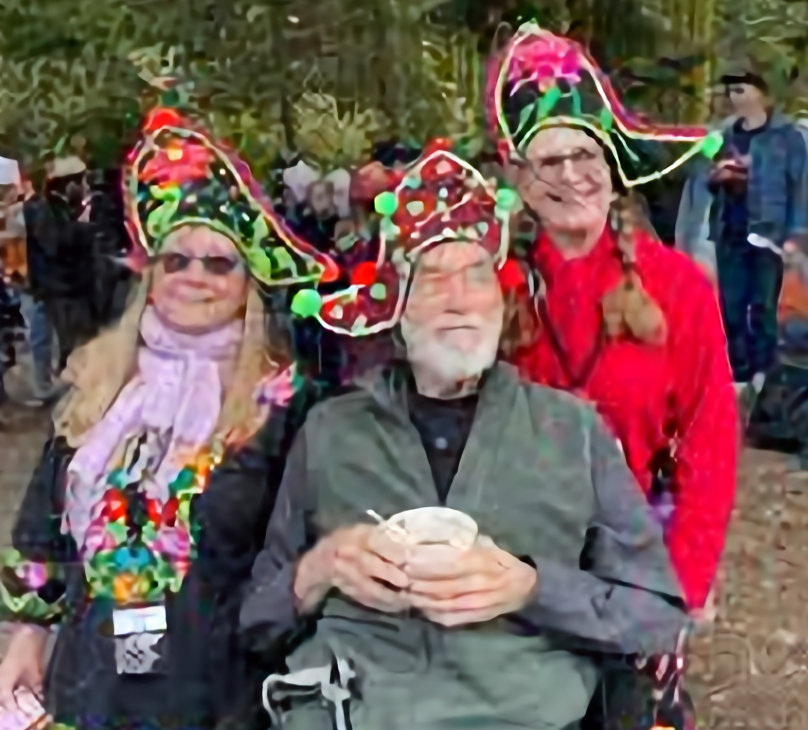
Kevin Carr (Part Three)
The Mendocino Years
Lark in the Morning Camp
San Francisco / Ren Faires / Blackpoint Old Time Music Festival
Festival of American Fiddle Tunes
The Hillbillies from Mars
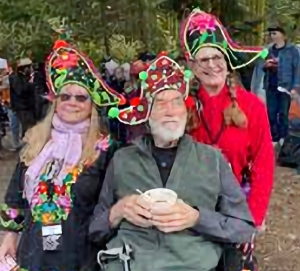 The Mendocino Years
Kevin Carr:
I had been in Mendocino a few times before I moved there. The first time I was there I met some of the Golden Toad people. I was having breakfast at a barn like restaurant on Main street, and in burst Bill Gilkerson, playing the Galician Gaita with his wife, Keirstin, singing and playing the tambourine. It was an electrifying moment. They were advertising a Golden Toad show that night, which I saw, and found to be exotic, enchanting and inspiring. I was also in Mendocino another time, when Bill Jackson was taking Vincent Griffin around to give concerts, and they played in Mendocino. I remember driving into town. It was eerily foggy. It was before it had been gentrified. It was just this gorgeous, romantic cliffside place with weather beaten wooden buildings, misty, distant foghorns, and the sound of the sea. I went to the place where Vincent was going to perform and there, playing on the front porch, were two Highland pipers. It was a profoundly Tolkien moment, because one of the pipers was a guy named Charlie Rudd, who was a dwarf with a twisted leg, long hair, and he was wearing a big, flat wide brimmed hat with a feather in it. The other piper was Lisa Emmons, who was petite and I swear she had pointed ears. She had exquisite features and, just like a real live elf, dressed all in green. I felt transported. And then I got to listen to Vincent play. That was before Carole and I had visited Vincent. But that night, hearing him play was just a magical, wonderful experience. I’ve been thinking about him lately, as he just passed away.
Daniel Steinberg:
What was Golden Toad exactly?
Kevin Carr:
Golden Toad was a loose tribe of musicians. I think they did the Renaissance Faires and other things like that. And they were scholars, travelers and researchers, who had lived with the people whose music they played. In addition to Bill and Kierstin Gilkerson, there was a man named Bob Thomas who had spent a long time in Europe researching and learning to make various bagpipes, and had worked in Tony Bingham’s storied music shop in London. Then there were Deb and Ernie Fishbach, and Mickey and Cait Reed, his partner at the time, who was a wonderful Irish style fiddler. And there was a guy named Chris Carnes who’d spent many years in Spain learning flamenco music. And Will Spires was part of that scene. He’d learned a lot about Cajun music and Mexican Tarahumara Indian native music from trips to those regions. And I think Brian Steeger later was part of that with his wife Marianne playing middle Eastern and Early Californian music. And there’s a bunch of belly dancers and folks who were later part of the Renaissance Faires.
Daniel Steinberg:
Gilchrist?
Kevin Carr:
His name was William Gilkerson. And his wife, Kiersten, a six foot tall gorgeous Norwegian woman and a mighty singer.
They were all just the most romantic characters to me because they’d actually been to the places these musics came from and learned from the people who carried the traditions. Anyway Carole and I had moved to Mendocino together, and then broke up, but we’ve always stayed connected. I saw her last fall at a Wake the Dead show.
Kevin Carr.
Anyway, mostly I lived in Mendocino with my old friend Spencer, from my high school rock band days.
Daniel Steinberg:
Spencer was the guy who was doing the meditation tapes, which I helped you record?
Kevin Carr:
Yes. (Daniel helped me record some folktales as part of some relaxation tapes that Spencer made at one point. It was quite a project because Spencer’s speaking voice was much slower than my storytelling voice, and making the two compatible took a lot of record engineering trickery and finesse on Daniel’s part).
Spencer had a camera store in Mendocino at the time, and I worked for him. And lived at his place. We had some pretty special parties at that place. It really was a magical spot, a little bit out in the woods. He had a wood fired hot tub in a building that had a little crawl space above it and another anteroom with a built-in bed. And that was where I lived while I was there, for a couple of years.
Daniel Steinberg:
So you could roll out of bed and into the hot tub?
Kevin Carr:
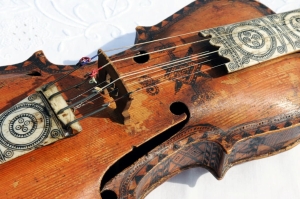 No, you had to walk outside, and get rained on, and then go in the hot tub. I remember listening to a lot of music at the time, trying to learn more about the traditions that interested me. Things like Norwegian Hardanger fiddle music. There was nothing more magical to me than Hardanger fiddle music, in the dark woods, with the sound of the dripping rain outside. But I do remember bringing a young woman over thinking I would charm her with this magical music. And I put it on, she sat there for a while with a bemused look on her face, and then she said, “You know, not everybody likes the same kind of music.” Oh, I was just deflated. But I still have some wonderful memories from days of deep listening. Things like the first time I heard French bagpipe music, Breton music, Georgian singing, and the first time I heard Matt Malloy play Irish flute on his solo album and how just mind blowing it was. But anyway, around that time, I think in 1980, Mickey rented the Mendocino Woodlands and held the very first Lark in the Morning Camp, which I think maybe was in 1980. They called it Mud Lark because it rained so much.
Lark in the Morning Camp
And so I started going to Lark. And I think I already mentioned that I’ve been going ever since. Except for last year when this illness kept me home. Lark Camp has been an incredible learning experience. It’s been a place to meet musicians of all kinds, from different traditions, hear them play, and learn from and interact with folks who have, over the years, become beloved friends. One could experience a dive into Greek, Serbian, Bulgarian, African, Mexican, Swing, Irish, Scottish, Turkish, Armenian, Breton, Galician, Andean, French, Cajun, Old time American, Swedish and English music, on various instruments – and this list is not exhaustive.
Daniel Steinberg:
Eastern European, middle Eastern?
Kevin Carr:
All that, and Jazz. And so many great characters including the Brunos, a wild group of iconoclastic Morris dancing, music playing, amateur alcoholics, and bagpipe players of all kinds: Greek, Swedish, Irish. Bulgarian, Hungarian, Breton, Italian, and French players. Alan Keith and that whole French music crew, Jehan Paul, Vicki Yancy and Deb Dawson and Arrigo D’Albert, who was a great hurdy gurdy player (vielle a roue) in the early years. And Denny Hall, who just passed away last year and who was a Blues man and bagpipe maker and a good friend of Mickey’s. Every year Denny would say something like, “Judy, (his wife) and I just bought Saz’s (Turkish folk lutes).” Or, “We just bought some Breton instruments and I’m going to start to make replicas.” It was an entrancing world to be part of. Anyway, sometime around those years I met you. That was on the street, right?
Daniel Steinberg:
Yep. It was the protest for a law banning street musicians that you guys were all playing to be a test case.
Kevin Carr:
Yeah, yeah. I didn’t actually busk very often in those days, but for that I came down and played on the streets. We all wanted to play for that cause. Thinking of playing on the streets makes me think of Mickey’s son, Corwin. I guess he wasn’t born for a number of years yet. But speaking of busking, it was funny because when Corwin was very young, he wanted an expensive video game. And he had started playing fiddle, so Mickey drove him downtown, parked him on the street, opened his case and said, call me when you have enough for the video game. So Corwin played away and was gobsmacked when he’d made enough in an hour for the game. Then he was hooked on busking. He’s become a phenomenally entertaining, gifted fiddle player.
Anyway, I am just thinking about the musical milestones of my life. The late ’70s were a bit of a muddle in my memory, but I do remember important musical experiences.
San Francisco / Ren Faires / Blackpoint Old Time Music Festival
I moved to San Francisco. I remember starting to play at the Plough and the Stars Irish Pub on Clement Street with the great sessions there, and I can’t remember what year it was. I played with Cathy Whitesides and Jeremy Kammerer on weekend nights. They had played with Joe Cooley, and they had a band with Kevin Keegan, who was another Irish accordion legend, who came from near where Joe Cooley had lived. Cathy and Jeremy had learned a lot of great East Clare/Galway tunes from Kevin, and I learned a lot of them from them. When Kevin tragically died very young, I joined their band on tenor banjo. Joe and Maureen Murtagh, wonderful musicians from Clare, were in the Irish music community in those days, and I was able to take some lessons from Joe. And around then I met my future wife Barbara Mendelsohn, who had been in the seminal mostly female Bluegrass band, The Good Ol’ Persons, with Kathy Kallick, Laurie Lewis, Dorothy Baxter and Paul Shelasky. When I met her it was after she had gotten sick with MS, and had had to drop out of the bluegrass band. She still played hammered dulcimer, which she had played in the band, along with guitar, bass and banjo, and for a while she made her living busking with hammered dulcimer on Fisherman’s Wharf in San Francisco. She was also working on piano accompaniment, particularly for Irish music, which she loved. She was always a deft harmonist, and she backed up Kevin Keegan, and Joe Burke when he came to town to play in the Plough and Stars Irish Pub in San Francisco. That’s where I met her for the first time, at a session in the Plough where she was playing guitar. I just remember she smiled at me when we met and I thought that she had a smile that could melt a heart at fifty paces.
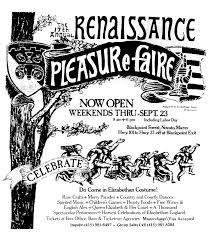 But nothing came of that immediately. What did happen was that we met again six months or so later, at the Blackpoint Old Time Music Festival near Novato, CA where the Northern California Renaissance Pleasure Faire was held. I had been playing pipes and fiddle at both the Northern and Southern California Faires, for two or three years. Those Faires were another place where I encountered the Golden Toad crew. Anyway the same people who put on the Ren Faires put on this folk festival that summer. At that time, actually all through the seventies, I had this summer job which was fairly close to Black Point, so I decided to attend.
My summer job deserves a digression. It was at the Bohemian Grove, a summer retreat for basically the all male ruling elite of America. And I was there because of a connection of Marty, my college sweetheart’s mom’s. So for about 10 years I worked there for the few weeks every summer when it was open, and it was pretty amazing. Talk about meeting astonishing musicians. The whole Grove was organized in these little camps. There were about a hundred of them, and there were themes. One of the camps was for millionaires from Santa Barbara. It was called Santa Barbara Camp. Another one was for millionaires from Los Angeles called Lost Angels. And my little camp was called Poison Oak, and the theme was late night music. After the parties would close down at the other camps, people would come to our camp because there was a grand piano and another piano and a drum set and a bunch of instruments, and though none of the people in the camp played music, they were powerful aficionados, and welcomed all kinds of musicians to come and play at pretty much any hour. And my job as a ‘valet’ was to be the bartender at night and then get up in the morning and cook breakfast, and then keep the place tidy.
Daniel Steinberg:
Would you play too or just listen?
Kevin Carr:
I didn’t play with them. There were people like George Shearing and Carl Eberhard. These guys played jazz at the highest level, which I didn’t play, but I had pipes with me, and sometimes I’d play for them. It’s where I met Ed Littlefield. One day I was playing the pipes and this guy comes running down the hill and it’s Eddie, and he says, I play the pipes too. I’m Eddie. And Ed has been a great patron of important musical events and endeavors over the years. A great player, too. And anyway, so I played pipes and I played fiddle occasionally. One day, one camp member, Gustavo Stahl, a big time coffee planter from Guatemala, introduced me to his son-in-law, a lovely man named Willard Tressell, who had been a concert violinist, but had gone into financial services to better provide for his family. Willard let me hold his priceless Italian violin. And God, I still remember it weighed nothing. It was a Guarneri. And in the coincidence department again, 20 years later after we moved to Southern Oregon I ran into Ruth Lowengart. Remember her?
Daniel Steinberg:
Yeah.
Kevin Carr:
Well she helped us in various ways get settled in. And Ruth’s husband was Lynn…
Daniel Steinberg:
You said when you met, moved to Mendocino, you don’t mean…
Kevin Carr:
When we moved up to Southern Oregon. This is years later, one day Lynn said, “Hey, I want to show you some stuff that might interest you.” He pulled out this box of junk. He said, “this is a very early attempt to make a violin synthesizer. It was made by a friend of mine who died young. His name was Willard Tressell.” That knocked my socks off. The odds of my knowing him and the connection were just unbelievable. And I had remembered Willard talking about this attempt to make a synthesizer that would actually sound like a violin, but this invention never came to anything anyway, but back to the Bohemian Grove. What a fascinating, great time. Great music, and quite an education finding out that the ruling class has the same percentages of numbsculls, normal folk, and princes as every other class.
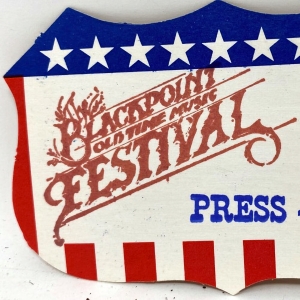 Now back to the Blackpoint Old Time Music Festival. Headlining the Festival were the Boys of the Lough, Franklin George, Sandy Bradley, Alice Gerrard and the Canote brothers, I believe. Memorable for a number of things. I learned a tune from Franklin George. I played for my first dance, with Sandy Bradley calling. (There was a feature in the paper that had my picture, playing for that dance – a real thrill).
Kevin really meets Barbara (Josie)
But here’s the main reason I remember that festival. As the festival ended everyone seemed to be in a state of exhausted bliss. As we were all filing out of the fairgrounds, there was Barbara, and she walked up and she just held her arms out and I held my arms out and we gave each other a big hug. And you know how when you’re falling asleep sometimes you have this jerk, your body will jerk a little bit. Well, I was hugging her and my body just jerked like that, and I thought, well, that’s weird. I think my unconscious knew something was up.
Anyway, then she left with everyone else who was heading out but soon she came back in and asked if I could help her out? She’d already asked a few other guys but nobody would help. Her tail lights didn’t seem to be working. What an opportunity to be Prince Charming, I thought. Sure enough her front lights worked, but the taillights were out, and when I looked there were fuses missing from her fuse box. Just missing. And years later, I would accuse her of having sabotaged her own car to meet me again, because who would steal fuses from her car? Anyway, at the moment I gallantly offered to drive behind her till she got home, and then we got to her place and stayed up talking and we talked and talked. She said had a boyfriend. And I said, well okay. But we talked more, and the air got thicker and thicker, and finally she said, you might as well just stay here, but as I do have a boyfriend, we really can’t have sex. And with those boundaries clear, it was the single most erotic night of my life. Oh my God.
Daniel Steinberg:
Who was the boyfriend?
Kevin Carr:
Oh, some Irish guy. Kind of a cad, but evidently gifted in certain areas.
Daniel Steinberg:
A charming cad.
Kevin Carr:
Yeah, good looking. And, thankfully, soon out of the picture. So we started dating and because at that point in my life I really didn’t have my shit together it didn’t look like we’d make it as a couple. I remember there’s a line that famous fiddler James Bryan used when he was being interviewed. The interviewer said, now, you and your wife, I heard that you guys broke up for a while, and Bryan said, oh, yeah, we tried divorce, but it didn’t work out. Anyway, Josie (Barbara’s middle name is Jo, and after we moved to Oregon in 2001 she started using Josie as her first name, and I can’t think of her as Barbara now) and I kept trying to break up and then we’d get together and both cry and say, well, maybe not. And that dragged on and on. Then we lived together, and after some serious growth on my part, we ended up having our son Daniel and getting married. Best thing that ever happened to me. For a book full of reasons, But since this piece is about music, I will just say that through her, I got major traction in my life. As Zorba the Greek said, “job, wife, children – the whole catastrophe!” And what an incredible blessing my catastrophe has been. And through her, I also got to keep meeting lots of wonderful musicians, because she was so connected both in the Irish scene and the bluegrass scene, and there was some, what do you call it, some . . .
Daniel Steinberg:
Crossover?
Kevin Carr:
Yeah, and serendipity. So I kept going to sessions at the Plough and the Stars, and going to Fiddle Tunes. The first year of Fiddle Tunes was before I was with Josie, and the second year we went together to the national Fiddle Contest in Weiser, Idaho, and then to Fiddle Tunes, and then the third year, I think we did the same thing. We met some great musicians in Weiser. Met Dave Daley from Boise and a whole crowd of people from Salt Lake City, and Spokane and Seattle. Tom Sauber from L.A., Mark Graham, Frank Ferrel, Tom Schaeffer.
Festival of American Fiddle Tunes
Daniel Steinberg:
They came to Fiddles Tunes.
Kevin Carr:
Yeah. Dave came a lot.
Daniel Steinberg:
Do you remember what year you went to Fiddle Tunes the first time?
Kevin Carr:
I think it was 1978. I know Josie and I did not go to Fiddle Tunes together in the first year.
Daniel Steinberg:
Now, I would’ve met you at Fiddle Tunes if I hadn’t already met you in Mendocino. It seems likely that we must’ve met before that. Maybe it was ’77.
Kevin Carr:
Yeah, yeah. It would’ve been, that’s right. Yeah. I’m pretty sure it was ’78 that I came. I looked, I remember looking at the roster, and those were the people I remember meeting that first year at Fiddle Tunes; Dewey Balfa, Mark Savoy, Alan Jabbour made the biggest impressions. And then I entered the Banjo Contest and won. I don’t know if I talked about that.
Daniel Steinberg:
Yes, you did.
The Hillbillies from Mars
Kevin Carr:
Oh, then we should talk about the Hillbillies.
Being in the Hillbillies from Mars has been like getting the brothers I never had. Musical brothers, with all the joys and connection and love and friction that goes with being in a family. But it has been an experience I am deeply grateful for. When we began to get noticed and hired to play for dance camps all around the country I remember struggling to balance the needs of my new little family of Josie, Daniel and Molly, with my need to play music with you guys. I didn’t sleep much. But boy was it fun. We’d meet like minded musicians and bands and we learned all kinds of things, and shared the stage with really great players. Here we are doing a concert at a dance camp in Knoxville, TN
I remember at Black Mountain, in Asheville, NC, hanging out with Mike Seeger; and Monte Toyon Camp (near Santa Cruz) with Rafe Stefanini and Bruce Molsky, and Bob McQuillen. Meeting Paddy League in Maryland. Kerry Elkin in Quebec. All the people that we’d meet, and the places we’d see, and God, I wish we had a list of all the camps we went to and all the people that we met there.
Dave Page
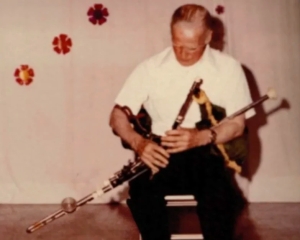
Kind of a jump, but did I tell you about meeting Dave Page, the great Irish piper, who lived in San Diego and came to Lark Camp early on. I forgot all about that. I later played with him on a movie soundtrack for a film called Swashbuckler. When he was a young man, he was in the Leo Rowsome Uilleann Pipes Quartet in Dublin. He passed his pipes along to a lovely piper named John Touhey. John still plays them in San Diego. But on the soundtrack of Swashbuckler, Richard Toomey played the fiddle, I played the Bodhran, and Dave played the pipes. If you listen carefully you can hear little snippets of our playing in the background. What a hoot. I remember they paid us a large pile of money to do very little. My part was just thump, thump a thump, and Dave’s part got cut down to a romantic scene with a sunset, the pipes sounding a note or two in the distance.
Daniel Steinberg:
So we are now in the eighties. And my question is, there’s many styles of music that you have played, and by then you were playing some French, I don’t remember when you started playing more Galician music, but you knew a few tunes.
Kevin Carr:
Yeah. Well, that’s interesting because basically, I only started playing French music because you taught those French dances at dance camps. I still have your little sheet with all the tunes and the dances, and it’s in Josie’s French dance binder. But you taught us a fair few tunes. And I picked up more at Lark camp over the years. Including from the famous French traditional band Lo Jai, who were at Lark Camp one year. Eric Montbel, the piper in the band, was a foremost scholar of French piping and an amazing, inspiring piper. Eric’s friend Thierry Boisvert was along with them at camp, and after camp he came and stayed with us. Thierry, along with Eric had spearheaded the renaissance of a type of bagpipe from the Limousin region in France called the chabrette, and Thierry had begun making that type of pipe. I longed for one for years and finally was able to find one. Thierry had made it for a brilliant French fiddler and piper living in Mendocino named Francois Dijon, who tragically died young. And at some point his wife offered me the instrument, saying Thierry would have liked me to have it. I felt blessed. Thierry also tragically died young, and just last year I passed the bagpipehe made back to his old friend Eric, which felt like completing a circle. I remember the Hillbillies would often play one or two French sets at concerts and they were great fun to play. But what cemented them in my brain was playing them for dancing, when you taught French dances at camps.
Playing French Music with Daniel Carr and Daniel Steinberg at the Fiddle Tunes Festival 2022
I tell you that’s why I loved learning to play for contradancing. We’d always describe the kind of music we played (Irish, Scottish, Old Time, French, Quebecois) as dance music. And yet there were lots of trad music players that almost never played for dancing and other players that did play for dancing, and it almost seemed to be two different versions of the same sort of music. I felt that the constraints of playing for dancing in a way that was solid, yet moved the dancers, literally and emotionally, made the music alive for me. There was still room for variation and creativity, as long as the rhythm was steady, and for sure, when everything was cooking with the Hillbillies playing for dances, with the mind reading, the beautiful tension between our styles, and our admiration for each others’ playing, it was an experience that just couldn’t be beat.
For some reason that makes me think about a book I read recently. It was about the life of Paddy Canny, a very famous Irish fiddler from the mid 1900s, and it is well worth a browse.
Daniel Steinberg:
Say the name again,
Kevin Carr:
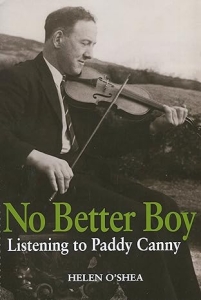 Paddy Canny. It’s called No Better Boy. And, among many fascinating topics, the author wrote about the time in Ireland in the traditional music scene when the listening music separated from dancing music and that there were players like Paddy Canny who did both, but he was very clear that when he played solo, he was playing more listening music. And Paddy was great friends with Vincent Griffin. But this book brings out that the players were very clear that dancers preferred steady, rhythmic, less ornamented music. And that the session musicians and the listening players were making the music into a different art form, a much more ornamented, lush kind of music. The extreme of which is Tommy Pots, this musician who, you almost have to describe what he does as jazz, but rooted 100% in Irish music. And he was actually dear friends with Paddy Canny. They’d get together and play . And the big question one wonders when contemplating their wildly different styles was, when they got together, what style did they play in? Nobody could imagine Tommy Potts playing with anyone else in that inimitable, unique style of his. The book answered this big question. They just played normal.
Daniel Steinberg:
Whatever that means.
Kevin Carr:
Whatever that means. No, but I mean, it was very, very good music. They’re wonderful recordings of Paddy Canny, just gorgeous playing. And he was the first traditional player to play on Irish radio. And by that, I mean in all senses the word, including his own unique intonation system that oftentimes would be called, out of tune. But no, he does play in tune. But it’s not your ‘in tune,’ or mine. But . . .
Paddy Canny & Kieran Hanrahan:
Daniel Steinberg:
Just enough to really bug people with perfect pitch.
Kevin Carr:
Exactly, yeah. Or people who weren’t born 200 years ago,
But he was the first traditional style fiddle player to play on the state sponsored radio. He made, I think, one trip to the US. He also played in the famous Tulla Ceili Band, which won many accolades and traveled to England. I had the chance to play more of the tunes from that part of Ireland in the 80’s when I got to play for Larry Lynch’s Ceili Dances on the Embarcadero, with Joe Murtagh, and John Lavelle, a wonderful Irish accordionist originally from Chicago. And Tony MacMahon would occasionally visit from Ireland and sit in as well.
I played Irish music intensely for ten or fifteen years then I kind of drifted in and out of the Irish scene. I always loved going to sessions. I loved playing with those folks, but I also loved playing old time music. I loved playing in the Hillbillies where we played all kinds of different things, the French music stuff, and then going to Lark and trying other things. And then going to Quebec and getting deeply involved in the music there, which I’ll say more about later. And so I practiced being a jack of all trades and, I suppose, a master of none. It was a good excuse for not being the reigning fiddle player in the world as I imagined I wanted to be.
Daniel Steinberg:
You still achieved quite a bit of that.
Kevin Carr:
Well, I did. I’ve done okay. Recently, thinking back on my meandering musical life, I realize I just tried to play a little of everything I came across that I loved, that called to me. And to play it reasonably well and reasonably faithfully to the source. It was that way with my fiddling and that way with the various bagpipes I started acquiring. It is hard now to clearly remember which instruments I got when.
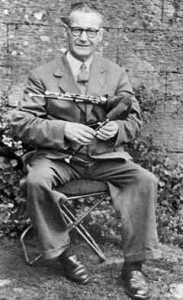
Billy Pigg with Northumbrian smallpipes. Archival photo from http://www.santa-fe.freeserve.co.uk/, taken from a record album. Copyright Leadersound Ltd 1971.
Daniel Steinberg:
Well, in the eighties, I’m pretty sure you had those new Irish pipes and Northumbrian smallpipes.
Kevin Carr:
I had Northumbrian smallpipes and I had Irish pipes, and I had Scottish bagpipes, and I might have had a Scottish small pipes as well.
Daniel Steinberg:
Because you were learning French music with us, you ended up with some French pipes.
Kevin Carr:
I did. I remember you got a vielle a roue, a hurdy gurdy, and we did a couple of gigs together with hurdy gurdy and french cornemuse bechonnet.And that was, let’s see, when was that? That would’ve been the mid eighties. Yeah, after our son Daniel was born, when our daughter Molly was just born. So that would’ve been the late eighties. I got some very nice French pipes that I wish I still had, but that’s the story of most of my pipes that I have sold. Always chasing some holy grail of bagpipedom. Anyway, it’s hard to remember the eighties. Kind of a blur, between getting married, going to graduate school, raising kids and working as a singing waiter and doing internships then starting work at Stanford and a private practice doing therapy work. I do remember that the Hillbillies started traveling more, at the end of the 80’s, doing music camps around the country. I was jealous of you and Paul because you could often stay a few days to recover, while it was always a redeye for Ray and me to get to work on Monday mornings. I know, small price to pay, and “we’ll sleep when we’re dead.” But we did do a lot of camps in the late eighties and nineties. And at least we did more camps in the summers.
Daniel Steinberg:
And some winters. We did Alaska a few times.
Kevin Carr:
Alaska, yeah, a couple times. I counted recently. I think we played in Fairbanks three or four times, and once in Anchorage, once in Juneau, and once in Homer. Then you and I played in Homer as a duo. And I went solo and played in Anchorage and Wasilla once. And years later the Carr family band played a dance weekend in Juneau. We made some great friends up there. Bill and Betty Connor, Gary Newman (father of Max, the amazing East Coast musician who I’ve been lucky enough to play a family camp week with in New Hampshire). And Lynn and Charlie Basham. Wonderful friends and players.
You know, after being taken, on one of our trips up there, to the Athabascan Fiddle Festival in Fairbanks, which is a gathering every November attended by native musicians, some of whom travel there by snow machine for days from all over Alaska and the interior of the Yukon, I felt I had to see it again. So I took my son Daniel when he was ten or so. Very rich experience to hear people play fiddle music that had had its origins in Scottish and Quebecois traditions, but had been adopted and adapted to the Athabascan culture. What a scene that was. Honored to have been there.
Do you remember a wonderful guy named Henry Hopkins who was from Juneau? Great all around musician in various traditions on various instruments – concertina, banjo, fiddle, guitar and he plays and was a maker of Irish pipes. You might not remember, because I might’ve met him at an Irish pipers gathering in Seattle. But I’m sure we ran into him in Juneau. He retired and moved to Grants Pass, and he’s become one of our favorite musicians in Southern Oregon! Plays a zillion tunes in a number of traditions, in great style.
Daniel Steinberg:
Has he been to the sessions that I came to?
Kevin Carr:
Yeah. If there was a concertina player there, it was he.
Daniel Steinberg:
Okay.
Kevin gets into Galician music and introduced to the Gaita
Daniel Steinberg:
So when did you start really getting reacquainted with Galician music?
Kevin Carr:
Well, in the late nineties, I only had those few Galician tunes that we played and maybe three others. I did have a Gaita (Galician bagpipe) but it was not a very good one. There were these tourist model bagpipes that a lot of people had, and I knew that Brian Steeger had one, and Ian Law, a great musician and bagpipe collector from San Diego was another bagpipe buddy, and he had one. Around that time I had started working with the Oakland Christmas Revels, which were enormous holiday pageants which generally had an ethnic theme of some sort. I know the first one I was part of was with the Hillbillies and it had an Appalachian theme. These Revels always had an enormous cast, with a chorus and singers and a children’s chorus, and they always hired a few pro musicians. That year the ringers were us, and Jean Ritchie, the famous Kentucky folks singer. Remember?
Daniel Steinberg:
That was the late nineties.
Kevin Carr:
Yes. Well I kept doing those shows. I did an Irish show with them, and a Scottish show. I got to play fiddle and pipes and do some acting and storytelling too. And got to work with the music director, Shira Kammen, a monstrously accomplished, soulful fiddler and all around musical force. Not to mention a delightful human. And the very inspiring artistic director David Parr and choral director,Fred Goff.
5TJAXW7BQH35I4QN3KYJLUZEHA
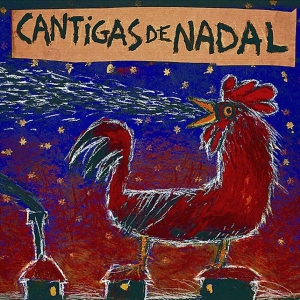
Anyway, I’m getting back to Galician music. I had found a Galician collection of Christmas music done by various leading tradfolk Galician groups of the day, called Cantigas De Nadal. It is still one of my favorite recordings. So I started campaigning for the Revels to do a Galician show. At first they were reluctant.
Around then we moved to Southern Oregon. Shortly after that, I got this call from Ian Law, a fellow bagpipe lover and collector and mighty musician, who also had a tourist Gaita. Ian told me his wife Wanda had declared that the Galician Gaita was the coolest bagpipe of all. She was referencing the fact that they could play major and minor keys, and they were easy to blow, and they had a lovely sound, and they were loud, but not too loud.
So this spurred Ian to decide that a group of us should make a group order of top notch instruments from one of the most reputable makers in Galicia, the Seivane family. And since he thought that of all of us, I spoke the best Spanish, I should make the phone call. I agreed, and I called the Seivanes and we managed to communicate. I placed an order for six bagpipes. All made of boxwood, trimmed in the same colors. Jim Oakden, Ian, Wanda, me and two others were in on the order.
And they said, okay, they will be ready in a year. And then the interesting coincidences started happening again. The first was that shortly after placing that order I was playing at the Sebastopol Celtic festival, and I saw a man walking around with the exact type of instrument that I had ordered from the Seivanes. I complimented him on his Gaita, and he asked how I knew what it was, and I told him of our group order and he burst out laughing. I asked what was funny and he told me that no one got their order within the promised time, and that he himself had had to go to the workshop and pound on the desk to get his Gaita. He introduced himself as Manuel Torres, then he gave me his card and said if I needed to know anything about Galicia I should give him a call. Shortly after that David Parr, Revels artistic director, called me and asked if I’d be part of the Galician Revels show they were indeed going to do that year. He wondered if I had any ideas about information sources. Well first I sent him the Cantigas De Nadal recording and another that I had come across, called Florencio, O Cego Dos Vilares by Pancho Alvarez, which was a homage to Florencio, the last of the traveling, blind street fiddlers. Florencio had passed away in the 70’s, but had been an immensely beloved character and important tradition bearer. He had a vast repertoire of song and music that would have been lost during the Franco repression if he hadn’t kept it alive. They very artfully used material from both recordings in the Revels that year.
FLORENCIO BLIND STREET FIDDLER FROM GALICIA
Then I remembered Manny Torres. David and I visited him, and gave us books on costumes, more recordings and said “listen, I have this friend who has traveled all through South America teaching Gaita. And he is very good friends with the Seivanes. You have a much better chance of getting your instruments in one year if he can come here.” So Manuel called his friend, whose nickname was Cano, and I set up a few concerts and a workshop for him. And he came. And brought our Gaitas. We had a fantastic time. He taught us Gaita, and Galician percussion. We became instant friends.( Many years later, when the whole family was in Galicia for a month, we visited the Seivanes, and Josie and I visited their private bagpipe museum, where she admired! the bagpipes, and I got to hold a fiddle Xose Seivane had made for Florencio, and which he had played)
Daniel Steinberg:
And you all got your Galician Gaitas because of Cano?
Kevin Carr:
Yes, exactly. And many more over the years. While Cano was here that time, I told him about Lark camp, and he said he’d love to come. So I arranged for him to come and teach at Lark. Which turned out to be a success beyond my wildest imaginings. He’s returned off and on for the last 25 years, and we have done Gaita institutes in Berkeley after Lark, to help spread the Gospel of Gaita.
After his second year the nascent Gaita band had 15 or so pipers and percussionists, and we started colluding with the Lark World Brass Band ensemble led by Gregg Moore, and the Zimbabwean giant marimbas, taught by Russ Landers and Sarah Noll, to do a massive camp finale. Which was epic. Take a look:
After a few years Cano started inviting me to come to Galicia, where he’d set up musical tours for me and a friend. The first trip over I brought Jim Oakden, a multi-instrumentalist, all around musician, great traveler, and fellow Gaita player. The second night that we were there, we were playing at an outdoor festival, and we met Pablo Carpintero, one of my all time Gaita heroes. He is one of the great scholars of Galician music, a Gaita maker of the highest caliber, and a thrilling performer. He couldn’t have been nicer and more welcoming. Later on that trip, we went from Santiago, where Cano lived, to Pontevedra, and met the president of the Galician Gaita Association who told us that there was an exhibition of Carpintero’s bagpipe collection at the local museum. We got very excited to see it, but the museum was closed that day. Then the president, José Presedo, said he would call the museum director and ask him to open it up. So he called, but the director said he’d only do it if Carpintero said it was okay. So Presedo called Carpintero, who remembered us from the festival, and said he would love for us to see his bagpipes.
So we got to see the most fabulous exhibition, all by ourselves, of about a hundred historical bagpipes. All from Galicia. And in the middle of touring the museum, a newspaper reporter showed up and interviewed us, and did a big story on us and our interest in Galician music and culture. And it came out in the paper the next day with pictures and it was a very wonderful welcome to Galicia. It was another in the series of events that made me feel I was in the right place, doing the right thing.
Daniel Steinberg:
What was the best experience you had there in Galicia?
Kevin Carr:
The best. Well, they were all good. On each trip I’d bring different people with me. Ray Bierl came once. Maureen Brennan, a lovely harpist and dear pal, came on one. That trip was extra great because I also invited my son Daniel and daughter Molly to come along. I had told them that all they had to do was to learn 30 tunes to perform and I’d bring them along. Now I knew my kids had grown up around music. They had no stage fright. Both of them are musically gifted, and they have great musical minds. Anything they learned, they could play perfectly. And Molly sings really well. They were a little concerned about needing elaborate arrangements, but I said they shouldn’t worry because anything with the harp behind it would sound great. And it was true. We did a number of concerts in some pretty fabulous venues. And we were tremendously well received.
And even though Molly was sort of pretending that she couldn’t play, and wasn’t really interested in the music, she came along when we went to these sessions. They were magic sessions full of interesting, handsome, charming, young people. Wonderful singers, lovely players who were incredibly welcoming and warm. And at the end of our trip Molly said “dad, I would like to come back here to live for a while. I’ve only got a semester left of school, but I’m doing it online anyway. What do you think?” And I said I think it’s a really great idea, and I’ll pay your airfare if . . .
Concerts in Galicia with Molly and Daniel Carr, and Maureen Brennan:
Daniel Steinberg:
If . . .?
Kevin Carr:
“You take your mandolin.” But it was getting right up near the time she was leaving, and she said she didn’t think she was going to bring the mandolin. I said, well, then I’m not paying your airfare. So she took her mandolin but kept it in her closet for the first little while she was there. She is very socially adept and was connecting with the young people we had met. Then a few weeks later, somebody showed up at the house and said, “come on, we’re going to a session. Get your mandolin.” And she said, “I don’t really play.” And the person looked at her and said, “bullshit. I saw you play in front of 200 people. You played mandolin and sang. It was fantastic. Get your fucking mandolin and come with me.” And she did. And three weeks after that, she was playing in a band.
Daniel Steinberg:
Right. I remember that band.
Kevin Carr:
Yeah. As Faiscas
Daniel Steinberg:
They came to Fiddle Tunes.
Kevin Carr:
Yes, in the full circle department. I felt like bringing both Daniel and Molly on that trip was one of the best bits of parenting I ever did. Molly lived there three years. After her second year there I retired and Josie and I went over there for a month, and Daniel, who’d been in Peru studying for six months, flew over and met us. And then we were just there for one month, but Molly stayed on for a third year. And Daniel stayed for the whole summer and played with the band. And then the following year in the summer when Molly came home, the band came back with her, and toured up and down the West Coast, and that’s when you met them.
A clip of As Faiscas from a house concert in Berkeley California:
And a video Molly made about the Galician language, after she got home:
Another great thing that happened while we were all together in Galicia was that we did our first gig as a family band – called the Family Carr. Get it? We did more gigs later on when everyone was home. There was a time when neither of them had entanglements, and we went on a summer long tour of gigs all across the US, ending up in Quebec where we went to the Memoires et Racines (Memories and Roots) festival, where we had been before, playing with Les Tetes de Violon when the kids were much younger. But more about Quebecois music later. It was so wonderful to play with them. A dream come true for me, and I’m so grateful we did it when we could, because Daniel, then Molly soon started relationships and careers that made travelling with the old folks impossible. We always mixed Galician music in with whatever else we were playing, because Galicia had made such an impression on all of us.
The Family Carr playing at the Green Show before the Oregon Shakespeare Festival in Ashland, Oregon and at Fiddle Tunes:
Kevin tells more about his bagpiping
Daniel Steinberg;
Tell me more about your bagpiping.
Kevin Carr:
Well it gathered a lot of momentum in the nineties. I kept on horse trading for instruments I wanted to play. I’d fall in love with a sound and a culture and find a way to acquire a bagpipe from there. At my height of madness I had four Galician gaitas, a wonderful Irish Uilleann pipe, two Scottish smallpipes, a magnificent Scottish Highland bagpipe made by Murray Huggins, the reigning genius of Scottish pipemaking and a current neighbor of mine, two Northumbrian smallpipes, five French bagpipes, a Hungarian bagpipe, two Bulgarian bagpipes, two Swedish bagpipes, and Italian Zampogna, a Croatian bagpipe, a Slovakian bagpipe, two Georgian bagpipes, a Czech bagpipe, a medieval bagpipe, a Greek bagpipe, an Iranian ney anban, a Tunisian mezzoued, and a partridge in a pear tree. I’m lying about the partridge. Some of my favorite gigs ever were at Stanford University and a few other places where I presented the instruments, with percussion accompaniment by the great Brian Rice, and told stories about them. These days I can’t physically play a number of them, and I am sending them off to new homes slowly. Hard to say goodbye to these old friends. But occasionally a new one is joining the stable, so . . .
Here’s a video I made about Bagpipes:
Kevin Carr (Part Three)
The Mendocino Years
Lark in the Morning Camp
San Francisco / Ren Faires / Blackpoint Old Time Music Festival
Festival of American Fiddle Tunes
The Hillbillies from Mars