

Yosemite Songwriting Retreat Interview with Gail Dreifus and David Budries
Blog Number 87, September 1, 2026
 On August 5th, I had the pleasure of sitting down with the founder of Yosemite Songwriting Retreat (YSR), Gail Dreifus, and her associate/partner David Budries to talk about the upcoming annual retreat, now in its 14th year.
Susie Glaze (SG): Welcome Gail and David! It’s great to have this chance to chat about your great songwriting retreat which is coming up this year in October! I want to start by asking you, Gail, about the origins of the retreat.
Gail Dreifus (GD): Hey Susie! The seed for the initial idea started when I went to Joe Craven’s music camp Rivertunes. I spent most of my time there at the songwriting section of the camp, and I thought this would be so much fun to have this kind of event with the focus just on songwriting. So, I started YSR 14 years ago, and I just took the risk that something would happen! I hoped that people would sign up, and they did. We had 16 people our first year. And I was glad that Joe Craven said yes to this project – he has been with us every single year but one, so he really has been the “grandfather” of YSR. And now we hire two other instructors every year, and then some instructors who do a few workshops.

Joe Craven and Gail Dreifus
So the emphasis of YSR is to have a safe and creative place for songwriters who either have never written songs, have several projects out there, have just started their careers or are professionals. So it’s all over the map, and it’s created a great community. That has been my great surprise. I had no idea what was going to come out of YSR, and fortunately, great friendships formed, with people returning year after year, and they tell their friends about it. And now we have a virtual open mic once a week that has come out of this. David, want to add to anything?
DB: I’m sort of a later entry into the organizing of YSR. I began initially with helping out with the virtual version during the pandemic, and after that as we progressed, we had to figure out where we were going to do the retreat. First we did it at The Bug here in Midpines, California and also in Mariposa County, but now it’s at the Grove House, which is a better venue with a real stage, and rented classroom spaces. It’s worked out really well. The community exists now and people are interested in learning at every level. We also encourage the teachers to teach at various levels so there is an attraction for the whole range of people who might be potential candidates for coming.

Song Salon
SG: Where do you find your teachers? Do the same ones come back every year?
GD: Only Joe comes back every year. Sometimes I have repeats, but I try to mix it up so it stays interesting. But I always get comments from students about their teachers, encouraging us to hire them again, which we hear a lot. As David said, we started doing YSR online during the pandemic, and that opened up a new whole new variety of teachers, because we could hire them from anywhere….
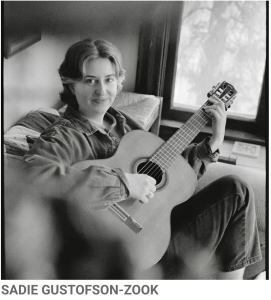
DB: Geography was less important, and it was less expensive to put someone online who was on the East Coast, or Tennessee, or wherever. We have two returning teachers this year in 2026 who have been very popular with the students, so we’re excited about having them back: Abby Posner, and Sadie Gustofson-Zook.
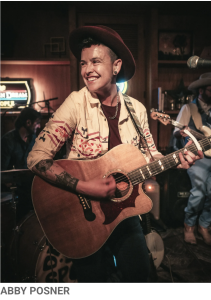 GD: Sadie lives in Minnesota and was recommended by a lot of people after the online retreat. She’s excited to be out here on the West Coast. I typically try to hire instructors of all ages as well, so there’s a wide age representation. When YSR first began I felt that it was a lot of gray hair participating, and now that has really changed. Today it’s all ages, which I really love. We learn a lot more from people if there’s a variety of viewpoints.
SG: What was the year that you began? Was it 2002?
GD: Yes, I think that’s right.
SG: How has YSR evolved over the years? Can you tell us about any milestone events that you remember that took your planning or curation into a different place?
GD: One event that really sticks out: I have a scholarship program, and during my second year, there was a woman who came, really needing a scholarship. And today, she is doing her video at the Ryman Auditorium in Nashville, and she’s played at the Grand Old Opry. So I feel really good about meeting her when she was young and getting started. That’s a real manifestation of rolling things forward. And we hope that folks come to us who really want to be there and move on with their music.
 SG: It must be inspiring for your future students.
GD: What I think is also a highlight of YSR is the evening open mic. It’s such a supportive community. Some folks are hesitant to play, but the feeling there is really an encouraging community and a lot of love.
DB: I think people are not afraid there, even with a song they’re just starting to sketch out, to share it. And that takes courage, but because it feels safe, they exercise that courage and perform. And it’s not about some perfection of performance, but about getting your ideas across, expressing yourself and understanding you’re building and living in a community that is supporting what you’re doing. You get a lot of encouragement and I think it really helps to build your own personal initiative to keep going. Even if this is your first time, it opens doors for you to be able to express yourself.
SG: Such a great community experience!
DB: There’s another part of this: Gail runs a ukulele ensemble which started small, and now has grown. They perform often, and at the performances they collect tips, with all monies going to supporting the YSR scholarship fund.
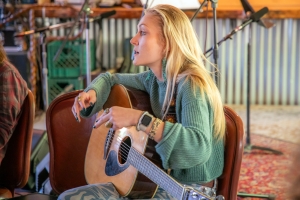
Hattie Craven
SG: How wonderful.
GD: It’s been great, and it’s the main reason we can offer the scholarships to help people attend YSR.
SG: Were there any events that changed or evolved the way things are done at YSR over the years?
DB: I think the main changes came from the students themselves and their interest in expanding ideas. One of the ideas was to create a song salon so that you could take any portion of a song you were working on and share it with a group of people for feedback. It’s not an instructor format, but a community-based gathering. And those groups have really grown. They are often 12-20 people. It opens a lot of doors and it’s another vehicle to get people to express themselves.
GD: Another thing we did was to create mentor sessions so students can have 20 minutes with an instructor for a one-on-one format. And that’s helped people. And I think YSR has given people confidence to take it to another level.
SG: Do you find that the students keep in touch throughout the year?
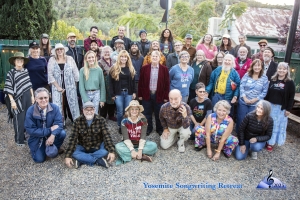 GD: Yes, we have a Facebook page for past students, and we have the Wednesday night open mics as well. I suggest that folks put what they are doing musically on the Facebook or Instagram spaces. And it’s been great. And when we all lose people in the community we get together and share.
SG: Your work has really made a difference.
GD: Another thing that I like at YSR is sharing meals together. At the Grove House our chef is amazing. People love his cooking and they also love that time to just be together.
DB: We don’t separate out at meal times, but stay together to further that bond that the retreat is forming. It introduces people to each other and creates chances for jam sessions, and builds communication.
SG: Do most of your students come from Western US or where?
DB: I think the bulk of them come from within 150 miles. Then we get some from the East or South, and some come from long distances. And the other advantage is the proximity to the Yosemite National Park.
SG: Last question. After everything you’ve built, is there a general sense of where you want YSR to go in future, are there any specific goals?
GD: I don’t see an end to it! As far as making it different, I’m open to ideas, and we always ask the attendees what their thoughts are about new things. We established the song salon, and David now teaches sound technology.
DB: We are constantly searching for new teaching talent. We are looking for expansion on ideas. And that’s good for everyone. It builds more depth into the experience of learning something that you may never have had the opportunity to be exposed to. So that search is ongoing, and it spurs discussion. We also speak to artists who are passing through our area for possible contributions. That expands our focus into other genres, for example. We try to stay flexible and agile in the idea of who could contribute constructively to the students. And that is ongoing.
SG: Do you ever design based on genre?
GD: We have a really great list of teachers that offer wide diversity. And incidentally, our teachers also let us know about how much they learned as well at this retreat.
DB: This is not so much about programming so much as finding interesting people, and the happenstance that they contribute something they didn’t even know they could, and that they learn and bring something new to the table. And that opens our insights.
SG: It sounds like YSR is thriving, and is getting more creative with the years. And the future will be bringing more energy, spirit, and community.
DB: I think the love of music does work in this context and I hope there are more of these kinds of things in the world going forward.
GD: What is also important to me is to keep the cost affordable for students. It’s hard work, but I’m thankful for the financial support around us.
DB: This is a labor of love.
GD: I also want to add that I welcome anyone reaching out with questions anytime about the retreat. Get in touch!
SG: David and Gail, thank you both so much for your time, and especially for the great work you do making Yosemite Songwriting Retreat the exciting and successful project that it is. Keep up the good work!
The 14th Annual Yosemite Songwriting Retreat happens on October 9th through the 11th at the Grove House, Mariposa, California, near Yosemite National Park. Visit their website here: www.yosemitesongwriting.com
Contact Gail HERE: gailpisces1@gmail.com
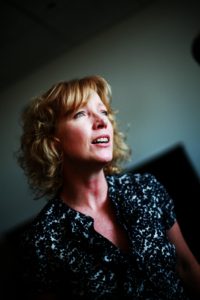
Photo by Cam Sanders
Award-winning recording artist, Broadway singer, journalist, educator and critically-acclaimed powerhouse vocalist, Susie Glaze has been called “one of the most beautiful voices in bluegrass and folk music today” by Roz Larman of KPFK’s Folk Scene. LA Weekly voted her ensemble Best New Folk in their Best of LA Weekly for 2019, calling Susie “an incomparable vocalist.” “A flat out superb vocalist… Glaze delivers warm, amber-toned vocals that explore the psychic depth of a lyric with deft acuity and technical perfection.” As an educator, Susie has lectured at USC Thornton School of Music and Cal State Northridge on “Balladry to Bluegrass,” illuminating the historical path of ancient folk forms in the United Kingdom to the United States via immigration into the mountains of Appalachia. Susie has taught workshops since 2018 at California music camps RiverTunes and Vocáli Voice Camp. She is a current specialist in performance and historian on the work of American folk music icon, Jean Ritchie. Susie now offers private voice coaching online via the Zoom platform. www.susieglaze.com
Yosemite Songwriting Retreat Interview with Gail Dreifus and David Budries
Blog Number 87, September 1, 2026