
Here’s to Dolly
Number 88. October 1, 2026
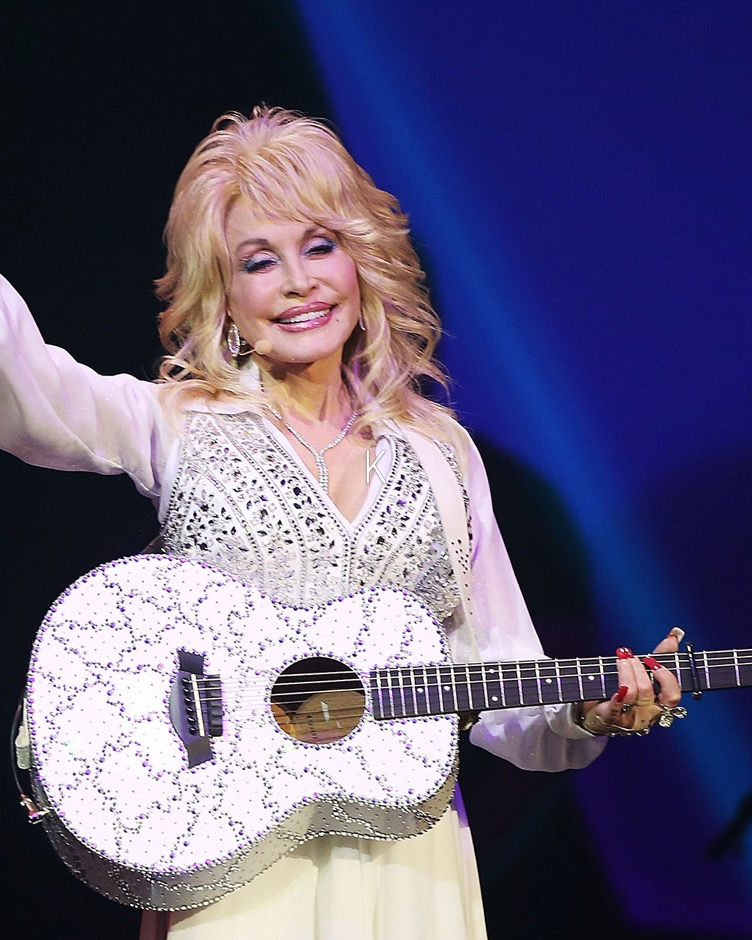
Since the day we learned that we had lost Dolly Parton to cancer, on August 25, we’ve all been treated to a lot of well-deserved, loving tributes to Dolly from media, news articles, obituaries, social media reactions and memories. I posted my own, after my simple, initial reaction: “My hero is gone.”
I grew up listening to Dolly Parton and being amazed by her. During the 1960s and 1970s I was growing up just a few miles down the road from Nashville, and was treated every Saturday night to an earlier-than-prime-time television show which was performed live from Nashville, The Porter Wagoner show, featuring Dolly Parton. It was my first introduction to country music.
I imagined each Saturday how the players would finish their quick 30-minute TV show (live of course!) and then all stream over to the Ryman Auditorium to be part of the Saturday night show at the Grand Old Opry.
There was so much about Dolly Parton that was larger than life. She made everything she did better: everything she touched was amplified and made more brilliant. You can see that plainly in all the videos we have to remember her by, all the music, songwriting, philanthropy, just pure creativity. I could see how she effortlessly lifted up those around her, whether in performing, interviews, or just chatting with fans. There was a kind of an aura around her, something great, grander, a transcendence and even a touch of the holy.
Dolly’s generosity of spirit was unbounded, along with her talent. And it all came packaged up in a gloriously glittery explosion of style we will never forget.
My friend, Jenny Tisi wrote an eloquent post that I’d like to quote here:
While many of us have come to know the story behind why she wrote, “I Will Always Love You”, a goodbye song to Porter Wagoner, when she knew she had to go her separate way from being on his show to start her solo career, years later, he sued her for breaching her contract. He sued her for $3,000,000, claiming he was entitled to a massive percentage of her ongoing solo earnings, touring revenue, and record royalties. They settled out of court and she literally paid him the first $1,000,000 she ever made and had to pay it back in installments, because although she was famous, she wasn’t that kind of rich yet to be able to hand it over.
She also, in the end, didn’t allow Elvis to record the song because his manager wanted half of the publishing rights to the song, and it had already become her #1 song. He told her this the hours before Elvis was to record. She cried when Elvis wouldn’t be able to record it because she wanted to hear him sing it. Elvis. The King. She stayed true to herself and the legacy she would leave her family. There was no way she was giving up half of what was rightfully hers. Smart woman…at a time in history where women were pushed around in their careers and blamed and accused of sleeping their way to the top. Dolly was having none of that. And she didn’t do it.
Later, we know she let Whitney Houston sing it, cried like a baby and had to pull over on the side of the road when she heard it for the first time. “My little song?” She made $10,000,000 in royalties from that song. What did she do with it? She opened businesses in a historically Black neighborhood in Nashville to help the neighborhood thrive. She called it, “The house the Whitney built.”
She supported Black Lives Matter, the LGBTQ+ community, and in her father’s name, began a legacy of putting millions of books in the hands of young children through her Imagination Library, to honor her father who was illiterate.
But to return to the story of “I Will Always Love You” and Porter Wagoner, Porter came upon hard times and had to sell the rights to his lifelong music catalogue. An anonymous buyer bought the rights. The buyer? Dolly. She could have been spiteful and made money off of those songs. Instead, she gifted him the songs back to him, free of charge, so that the songs would always belong to his family. She then honored his life, 5 months before his death, by singing the song to him once again at the Grand Ole Opry.
I don’t think enough has been written about the brilliance of her songwriting. I know that her fans understand this, but I don’t think enough of the wider world understands that behind that facade of glitz stood an immaculate storyteller, one with power, grace, wit, and overall gifted technique. Her songs were deceptively simple, so could be tossed off as light fare, too girlish for serious attention. But no: Dolly’s recognition of human nature and where it went right and where it went wrong was piercingly perfect, revealing truths and tragedies with the most sympathetic of perspectives. She revealed women’s perspectives in devastating stories like “To Daddy.” You think you know where the story is going as the song goes on, but the reveal comes with the power of song:
“Mama never seemed to miss the finer things in life, if she did, she never did say so to Daddy…..being took for granted was a thing that he accepted, and she didn’t need those things to make her happy, and she didn’t seem to notice that he didn’t kiss and hold her, if she did, she never did say so to Daddy.”
The end of the song has Mama leaving the home behind, and a note saying:
“I have needed you so long, but I just can’t keep holding on. She never meant to come back home, if she did, she never did say so to Daddy. Goodbye to Daddy.”
Not simple. Devastating. From our finest ever country music songwriter. Dolly Parton.
I never got to see Dolly in person during all those years I lived in Tennessee or anytime after that. However, in early October of 2016 I was in the audience for Dolly’s sold-out 2-night concert tour at the Hollywood Bowl. I had never seen her perform live and I believe I wept with joy through the whole thing. She had elaborate sets, on-stage musicians, storytelling about her life, all interspersed with immaculate performances of her songs. I had never seen anything so wonderful in my whole life, and I may never again! God’s blessings on this brilliant and wondrous soul.

Photo by Cam Sanders
Award-winning recording artist, Broadway singer, journalist, educator and critically-acclaimed powerhouse vocalist, Susie Glaze has been called “one of the most beautiful voices in bluegrass and folk music today” by Roz Larman of KPFK’s Folk Scene. LA Weekly voted her ensemble Best New Folk in their Best of LA Weekly for 2019, calling Susie “an incomparable vocalist.” “A flat out superb vocalist… Glaze delivers warm, amber-toned vocals that explore the psychic depth of a lyric with deft acuity and technical perfection.” As an educator, Susie has lectured at USC Thornton School of Music and Cal State Northridge on “Balladry to Bluegrass,” illuminating the historical path of ancient folk forms in the United Kingdom to the United States via immigration into the mountains of Appalachia. Susie has taught workshops since 2018 at California music camps RiverTunes and Vocáli Voice Camp. She is a current specialist in performance and historian on the work of American folk music icon, Jean Ritchie. Susie now offers private voice coaching online via the Zoom platform. www.susieglaze.com
Here’s to Dolly
Number 88. October 1, 2026