
From Ancient Times to Now
A Short History of the Bagpipes
Number 81, March 1, 2026
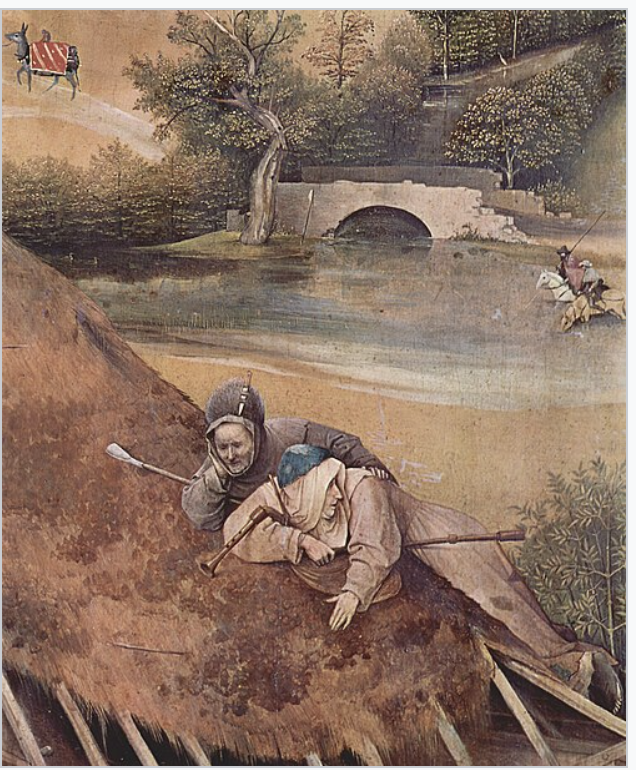
To honor our spotlight artist for March, Kevin Carr, I’ve been asked to write a blog about the history of bagpipes.
The vastness of this topic takes us to ancient civilizations from all over the world. So I will leave it to you, dear reader, to enjoy the simple descriptions below, and then let yourself delve into the referral links for a deeper dive into the topic. There are some fun videos below as well.
Bagpipes are an ancient instrument, with origins likely in the Middle East, Egypt, or Mesopotamia, dating back thousands of years. While iconic to Scotland, early forms existed in Rome and Asia before arriving in Europe, evolving from simple reed instruments into complex, drone-driven instruments by the Middle Ages.
The bagpipe is a woodwind instrument using enclosed reeds fed from a constant reservoir of air in the form of a bag. The Great Highland bagpipe is well known, but people have played bagpipes for centuries throughout large parts of Europe, North Africa, West Asia, around the Persian Gulf and northern parts of South Asia.
The term bagpipes is also used, though pipers usually refer to the bagpipes as “the pipes”, “a set of pipes” or “a stand of pipes”.
Bagpipes are part of the aerophone group because to play the instrument, air must be blown into it to produce a sound.
Ancient Origins
The earliest, heavily debated, evidence suggests bagpipe-like instruments existed around 1000 BCE in Anatolia (Hittite slab) or via ancient Egyptian/Babylonian reed pipes.
Roman and Early European Usage
Greek and Roman references indicate early forms (e.g., the Greek askaulos, Roman tibia utricularis) were used throughout the Mediterranean by 100 CE.
Arrival in Scotland
The instrument reached Scotland around the 13th or 14th century, potentially brought by returning Crusaders, Romans, or Norse invaders. It replaced the harp as the primary instrument for social and military life.
Military Development
By the 18th century, the Great Highland Bagpipe evolved into its modern form, becoming integral to Scottish military regiments and often used to intimidate enemies, with sounds that could carry for miles.
Cultural Symbol
Despite being banned by the English following rebellions, the bagpipe became a lasting symbol of Scottish culture and a staple of military bands worldwide.
Modern Status
Today, while often associated with Scotland, the world’s largest producer is currently Pakistan, and the instrument exists in various traditional forms throughout Europe, such as in Spain, Bulgaria, and Italy.
Here are a few helpful websites for further information about the history of bagpipes from multiple sources below:
Henderson Song Group
Baggy Pipes
Scotia Pipers UK
Getours in Scotland (travel site)
Here is a wonderful new video released in 2025 called the “Untold History of Bagpipes.”
Discover the full history of the Bagpipes, one of the world’s most iconic musical instruments. From its mysterious ancient origins in the Middle East and Rome, to its rise in Celtic and Scottish traditions, the Bagpipe has carried the sound of culture, war, and celebration for thousands of years.
Thanks to Trudy Israel for this video link.
Live Concert Opportunity
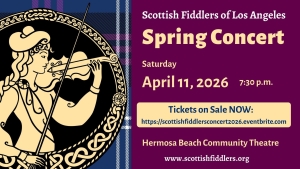
If you are in the Los Angeles area, you can hear a marvelous piper, Dave Champagne, as a featured guest of the Scottish Fiddlers of Los Angeles at their annual spring concert at the Hermosa Beach Community Center on Saturday, April 11th. Dave is a multi-instrumentalist and you can read more about him on his website. Dave Champagne Bio
Also on his website is a wonderful essay on “the instrument.” You can Find it HERE
Join me and a brilliant group of musicians for the Scottish Fiddlers of Los Angeles’ spring concert on Saturday, April 11th. You Can Find Tickets HERE
Thanks for reading!
Love and Blessings,
Susie

Photo by Cam Sanders
Award-winning recording artist, Broadway singer, journalist, educator and critically-acclaimed powerhouse vocalist, Susie Glaze has been called “one of the most beautiful voices in bluegrass and folk music today” by Roz Larman of KPFK’s Folk Scene. LA Weekly voted her ensemble Best New Folk in their Best of LA Weekly for 2019, calling Susie “an incomparable vocalist.” “A flat out superb vocalist… Glaze delivers warm, amber-toned vocals that explore the psychic depth of a lyric with deft acuity and technical perfection.” As an educator, Susie has lectured at USC Thornton School of Music and Cal State Northridge on “Balladry to Bluegrass,” illuminating the historical path of ancient folk forms in the United Kingdom to the United States via immigration into the mountains of Appalachia. Susie has taught workshops since 2018 at California music camps RiverTunes and Vocáli Voice Camp. She is a current specialist in performance and historian on the work of American folk music icon, Jean Ritchie. Susie now offers private voice coaching online via the Zoom platform. www.susieglaze.com
From Ancient Times to Now
A Short History of the Bagpipes
Number 81, March 1, 2026