
Forming a Bridge – Poor Pilgrim of Sorrow and City Called Heaven
Number 80, February 1, 2026
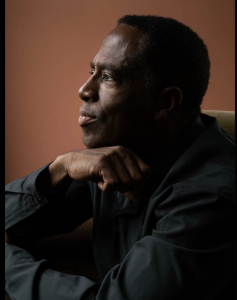
In the spring of 2023 I was given a great gift: the chance to collaborate with a remarkable artist on combined versions of a sacred song of lament that we each knew, in different formats, and coming from different places. But the message was the same. We would create a performance piece combining his gospel “City Called Heaven” and my Appalachian sacred song “Poor Pilgrim of Sorrow.” What we created that year was an original version of a lament of deepest pain and desire for release. This new creation emanated from both the traditions of African-American and Appalachian sacred songs, each in its way the same cry from the heart.
I first met Michal Connor years ago at All Saints Church in Pasadena as our Canterbury Choir was preparing several of his original compositions to perform in services. Years later, when Michal became more involved in the music department there, he performed a gospel program, and one song was called “City Called Heaven.” I immediately recognized it as a version of a tune I knew from the Jean Ritchie Appalachian sacred repertoire, “Poor Pilgrim of Sorrow.” The words are almost identical.
Then, during the season of Lent in spring of 2023, Michal and I began work on a piece for performance that combined these two songs into one cohesive form. Michal was moved to compose an original interlude to be played between the two songs, a hauntingly beautiful melody for violin and piano that expressed the feeling of the two songs so perfectly. The music was so appropriate to the theme and emotional message conveyed by these two songs, which send the same message: all people, regardless of race, religion, demographics, gender or age, suffer the pain of the soul and longing for connection in times of ostracism and isolation.
Background
Michal’s song, ”City Called Heaven,” originated as a traditional African American spiritual, identified by musicologists as a “sorrow song” that expresses longing for freedom from earthly suffering, and a spiritual hope. It is characterized by themes of being “tossed and driven” while seeking a better, heavenly home. The song is rooted in the early African American oral tradition, often performed in a “surge-singing” style, emphasizing slow, emotional delivery. It was deeply connected to the hardships of life, reflecting a desire for liberation from pain and injustice.
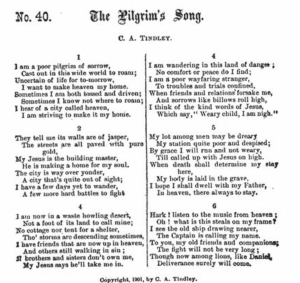 “Poor Pilgrim of Sorrow” (which may well have the same origins) began it’s life in the 19th century as a sacred hymn by C.A. Tindley and was then called “The Pilgrim’s Song.” This version was published and copyrighted in 1901. “Poor Pilgrim of Sorrow” is now performed widely as an American folk hymn. It depicts a weary traveler navigating a harsh world, while hoping to find a home in heaven. It is known for its plaintive, sometimes unaccompanied, style, expressing deep themes of mourning and spiritual resilience. It focuses on struggle, earthly suffering, the temptation to despair (“sometimes I’m tossed and driven”), and the ultimate hope of rest in “a city called heaven.”
My version was learned from Jean Ritchie, who recorded it in the 1960s. She learned the song in her family’s “Old Regular” Baptist sacred tradition and offered it up a capella as was the style of that song style. As Michal mentions below, I also re-arranged a few words of lyric to more accurately reflect my own family and my own source of confusion and sadness.
Research on Versions & Renditions: Appalachian/Folk: Often sung as a haunting, unaccompanied tune in the rural South. Gospel: A powerful, soulful rendition was recorded by J. Robert Bradley in 1950. Other versions exist by Albertina Walker and Lou Rawls. The song’s imagery includes looking forward to a city with “walls of jasper” and “streets… paved with pure gold,” serving as a metaphor for relief from earthly burdens.
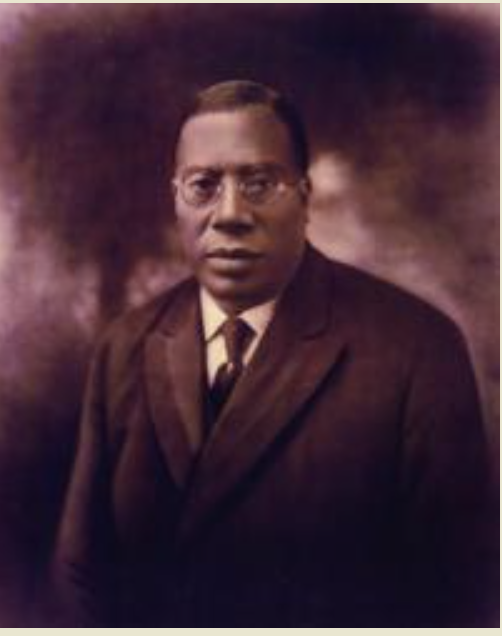
 Authorship: As mentioned above, the original composer, Charles Albert Tindley, was born in Maryland in 1851. The son of slaves, he lost his mother when he was four, and was separated from his father when he was five. He taught himself to read and write, and at age seventeen he moved to Philadelphia, Pennsylvania, where he worked as an unskilled laborer and a janitor at Bainbridge Street Methodist Episcopal Church. He studied at night school and by correspondence course, including Greek and Hebrew, before applying to become a Methodist minister. He was admitted as a probationer in 1885, serving at Cape May, New Jersey; he was then made a deacon, working at South Wilmington, Delaware.
I recently had the opportunity to talk with Michal Connor about our collaboration on this piece, in honor of Black History month’s appreciation of the African-American experience in America.
Interview with Michal Connor
SUSIE: I’m remembering how we worked on the combination piece of Poor Pilgrim of Sorrow and City Called Heaven…it was such a special project!
MICHAL: Yes.
SUSIE: And I always felt that it was a personal, shared message from the soul to the divine, that you and I expressed from different perspectives. It was wonderful to discover your version of this song.
MICHAL: Yes, I was thinking about it and I believe that both of our characters, your character and my character were [expressed] in the first person I think….
SUSIE: Yes.
MICHAL: …talking about how I’m going someplace that I may not know, or that you may not know, but I’m going there.
SUSIE: And the motivation in my Appalachian version was that I’ve heard of this place where I can fit in, where I can be appreciated, because here, in this life, I can’t find a way in. “My brothers and sisters won’t own me because I’m trying to get in…”
MICHAL: Right.
SUSIE: The suggestion is that my family (or in the broader sense, a community, a culture, a country, etc.) has rejected me.
MICHAL: Yes, right.
SUSIE: So the message in the song is that I’m searching for a place where I can find belonging, a family. Do you think that way about your version?
MICHAL: Absolutely, and from my own family structure, I’ve sung it over the years and added, as the slaves did who sang it originally. “They”…my grandmother was the most holy person that I ever met. And there is one part that goes “my grandma has reached her full glory.” And [since] my father was a horrible person…the next line is “my daddy lived his life in sin.” And my littlest sister “won’t own me because I’m trying to get in.” And my sister is a horrible person, and so I’m able to really connect with the words of this piece because it’s just so personal, it’s like a personal utterance, which all great art is.
SUSIE: I felt strongly that our presentation was a bridge that we formed between our two sides of the racial divide to send the message that we as human beings share so many fundamental truths: we are united in our sufferings, and we reach out to God for guidance, redemption and relief. And you and I were able to express this through a new work of art.
MICHAL: Yes, absolutely. And one of the things that strikes me over and over about it, and I’m surprised by it, is the amount of time it took. Every breath was with us, we weren’t rushed, no one was looking at their watch thinking oh, how much longer is this going on?
SUSIE: Right.
MICHAL: And they [the audience] were hearing – maybe they were putting themselves in the place of you, or the place of me. And then that lovely violin line comes in [he sings]….
SUSIE: Your composition of that interlude is so painfully beautiful.
So do you agree with me about the message, that we, our souls, are searching in this piece for belonging as we search for a benevolent community?
MICHAL: I see what you mean by community. You know, the Appalachians were dirt poor as were the slaves. It just doesn’t get more depraved and sad than that. And I think they’re just looking to get away from the pain, from cold, starvation, from beatings, the violence.
SUSIE: Rejection….
MICHAL: Absolutely.
SUSIE: The slaves did suffer so profoundly, and it is so deeply moving to approach and feel that reality in this song. I’ve called this a song a reflection of a universal human condition.
MICHAL: Yes, everyone faces pain and deep sadness. Everybody knows someone who has had cancer and dies [for example].
SUSIE: What do you think about how this message will resonate for today, specifically for the situation we’re in today as a country and a world and a culture?
MICHAL: Half of the country is absolutely fine with the way things are. And there’s half the country who believes that this is the worst things have ever been. And I’m one of those that thinks it’s the worst it’s been in my lifetime. And there’s no talking, no facts you can bring, to create a primer on compassion for people. Recently I said to someone that the only way in this country I’m aloud to be heard is if I sing. If I speak and they don’t like what I say, I will be erased. Even in the most progressive of places, even, I am silenced. In that same conversation we said that the only way to change people’s hearts just a degree is through music.
SUSIE: It is absolutely.
MICHAL: And I think our song is, I think the reason it has such an impact is because it is telling that first person story, standing there naked and saying I am poor ….
SUSIE: And I’m in sorrow….
MICHAL: I’m in the deepest sorrow. And most people are ashamed of saying “my heart is broken.” We stand up and tell this deeply personal story…I think it’s magical, because most people are afraid of show their skin.
SUSIE: It’s a vulnerable place. You’re just bearing everything.
MICHAL: There’s no accompaniment, when we’re singing, and the audience can hear every breath, every rasp, every bent note…
SUSIE: I was so grateful for our opportunity to do that, to use by demonstration, to express to people these truths. I felt our piece bridged the gap in some way between races and demographics, genders and these things that we feel have come to divide us over the centuries. I felt it was a unifying piece. And you are such a soulful interpreter. I’m a true admirer of your work as an artist.
MICHAL: Singing with you is such a great honor. And I thought to myself, I remember after our project, I thought, oh my gosh, what a privilege.
SUSIE: It was, and its a privilege to talk with you today, Michal. Thank you.
Our pianist is Dr. Weicheng Zhao, Director of Music at All Saints Church, Pasadena, and our violinist is Fang Gao. Thanks to Keith Holman and Ken Gruberman for the video, and to All Saints Church. Original music composed by Michal Dawson Connor.
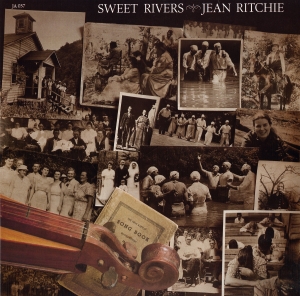 One personal note about my choice of lyrics: years ago, when I learned the song from a Jean Ritchie album “Sweet Rivers,” I noted that she originally sang “my mother has reached the bright glory…”. At the time that I learned the tune my father had died and my mother was still living. So I switched the words then. Since then my mother has also passed away, but I’ve kept the lyrics the same.
Poor Pilgrim of Sorrow
I am a poor pilgrim of sorrow
Cast out in this wide world to roam
I have no hope for the morrow
I’ve started to make Heaven my home.
Sometimes I’m tossed and driven
I know not where to roam
I’ve heard of a City called Heaven,
I’ve started to make it my home.
My father has reached the bright glory
My mother is struggling in sin
My brothers and sisters won’t own me
Because I’m trying to get in.
Sometimes I’m tossed and driven
I know not where to roam
I’ve heard of a City called Heaven,
I’ve started to make it my home.
About: Michal Dawson Connor is an accomplished performer and composer of choral, chamber, and solo vocal works, with a particular emphasis on Slave songs created before the Civil War. He was born in Jamestown, New York, and is a proud alumnus of Carnegie-Mellon University and L’Ecole Hindemith in Vevey, Switzerland – where he studied voice with Blake Stern and Helen Boatwright. Championing American composers has always been a high priority for him, and Mr. Connor has concertized extensively throughout North America, Europe, and Asia, specializing in the rich vocal repertoire of Charles Ives, Samuel Barber, Aaron Copland, and many others.
Love and Blessings,
Susie
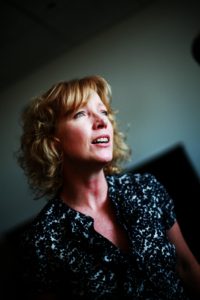
Photo by Cam Sanders
Award-winning recording artist, Broadway singer, journalist, educator and critically-acclaimed powerhouse vocalist, Susie Glaze has been called “one of the most beautiful voices in bluegrass and folk music today” by Roz Larman of KPFK’s Folk Scene. LA Weekly voted her ensemble Best New Folk in their Best of LA Weekly for 2019, calling Susie “an incomparable vocalist.” “A flat out superb vocalist… Glaze delivers warm, amber-toned vocals that explore the psychic depth of a lyric with deft acuity and technical perfection.” As an educator, Susie has lectured at USC Thornton School of Music and Cal State Northridge on “Balladry to Bluegrass,” illuminating the historical path of ancient folk forms in the United Kingdom to the United States via immigration into the mountains of Appalachia. Susie has taught workshops since 2018 at California music camps RiverTunes and Vocáli Voice Camp. She is a current specialist in performance and historian on the work of American folk music icon, Jean Ritchie. Susie now offers private voice coaching online via the Zoom platform. www.susieglaze.com
Forming a Bridge – Poor Pilgrim of Sorrow and City Called Heaven
Number 80, February 1, 2026