
Festivals You Didn’t Know You Needed
NUMBER 48 - From Black Americana Fest to Tumbleweed: New and Old Ways to Engage and Support Folk Culture
June 2026
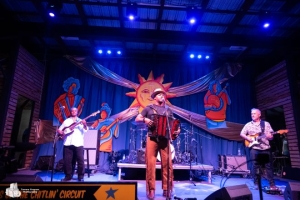
Black Americanafest 2025, photo by Tamara Grayson
Maybe you see the ad in your local paper; maybe you see flyers at the grocery store or library. I’m here to tell you: just go to that festival. Go fall in love with it. Here are some inspirational stories from people who did just that.
Black Americanafest is quickly becoming a New Orleans staple amid the many things always going on in the Crescent City.
Dusky Waters is the singer-songwriter who co-founded Black Americanafest. You can find her listed on NewOrleans.com travel and tourism site. She’s dedicated to uplifting the legacy of the Greater Mississippi Delta culture.
There’s often an assumption that “.org” or “festival” implies a mechanism comprised of a lot of moving parts. Oftentimes, though, there are only 2-3 organizers, especially from the outset.
It was 2023 when Dusky and her friend Teena May decided to do this thing. They found funding to create “the best day of my life,” as Dusky told me. “It was really small.” And it was a lot of work. But they quickly realized: “The community wants us! We gotta keep going!” They went on to create a 501(c)(3).
The second year was 2024, when the party supported by The Heritage Foundation once again took over federal resources, grants have been harder to come by. Black Americanafest has been charging admission the last few years, out of necessity. Festivals and organizations have overhead: not only the event venue & equipment, but maintaining a web presence, advertising, outreach to artists and volunteers, even grant writing. It costs money to ask for money.
“Our goal is sustainability. It is first and foremost a working people’s festival: We don’t want anybody to be turned away. We’ve had free tickets (no questions asked) and we’ve also had people say: ‘I can pay, and I’d like to pay it forward.’ They’ll buy their ticket plus an extra we can give to someone.”
But there’s more than just the main festival in September: Black Americanafest supports and hosts year-round events, like Southern Nights at Snug Harbor Jazz Bistro. Dusky Waters curates this monthly series celebrating women songwriters, original music, and “the heroines who shaped us,” she told me.
Preserving and uplifting Folk culture in all its forms is the bedrock of FolkWorks, and it’s something that’s extremely important to me: that’s why I’m here. So I asked Dusky what exclusion looks like.
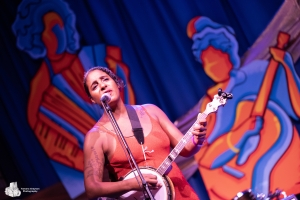
Leyla McCalla at Black Americanafest, photo by Tamara Grayson
“I’d like to answer from the perspective of what I am,” she said. “I loved Folk and Country music, but I was a little embarrassed – there was nobody in there who looked like me. But when, in my 20s, I saw the Carolina Chocolate Drops – everything just opened up for me.”
Black Americanafest’s 2025 headliner was Dom Flemons. Shoot, even I get goosebumps just thinking how manifest that is. I can’t imagine how it felt to the person who knew her community needed a festival and made it happen. Also featured were The Suffers, Leyla McCalla, and Sunny War, among many others.
Please take a side-jaunt and enjoy the incredible photo-art of Tamara Grayson. Her images of Black Americanafest 2025 create a whole world. We invite you to visit.
Black Americanafest 2025 – Tamara Grayson
The 2026 lineup includes Joy Clark, Tray Wellington (click here and find the service elevator picture I took of him at FAI) and others to be announced.
My last question was this: What can people do to help you? Dusky Waters answered simply, with one very meaningful word: Engage.
“Engage. If you’re local, or if you’re visiting, come see us. Sign up for the newsletter. If you can’t come, you can donate through the website.”
Peace Love and Union Saltwater Songwriters Festival takes place every July in Union, Washington: a week-long retreat-style atmosphere at the Robin Hood Village Resort on the shores of the Hood Canal. Peripheral events in the neighboring community include a themed pub crawl, a themed concert, and a Sunday brunch.
The main draw for this event is a listening-room like atmosphere for the main concert, though songwriters who are invited to participate are welcome to stay for the week. Some of them do; some are touring musicians who can stay only a day or two. Audience members, too, are able to book as much time as they’d like to stay – besides locals and those within driving distance, people will fly in to this destination, some year after year.
PL+USSF tries to keep the songwriter roster on a 3-year rotation. From the first year, though, 2x Grammy-winner Kristian Bush told the organizers something to the effect of “I get why you want to do it that way, but we’d sure like to come back again next year.”
Founder/organizer Rob Hill says this & last year’s pub crawl theme, “Bar Hoping,” is named after a song he wrote about a typo. “I think it was on Facebook or something; they wrote who wants to go barhopping but with only one ‘p’. It made me think.” It makes me think, too…going bar to bar, looking for hope…or maybe leaving some: polite conversation with no numbers exchanged. A revival of decency. Kindness as proof of life.
You can listen to Rob’s song ‘Bar Hoping’ here:
Each year there’s a theme for the Saturday concert. First came “Girls Just Wanna Have Rum.” Last year was “Heart Like a Wheel,” a restrospective of Linda Ronstadt’s work.
“In our area we have a perhaps disproportionate number of women who perform Linda Ronstadt covers,” Rob said. “We also have a disproportionate number of really good sound engineers, which works well for us.” Recruitment is a non-issue; his sound tech friends just ask now what the dates of the festival will be, making sure they’re available.
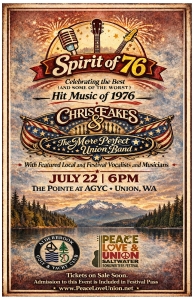
“Spirit of ’76” – this year’s theme – is tied to our nation’s anniversary in the ironic sense only, says Rob. “It’s really about 1976. There was some damned good music that year.” Organizers started with a list of around 100 songs and asked potential performers to pick a song or two. As momentum gathered, and more musicians wanted to participate, they narrowed it to one song each.
The Pointe at Alder Brook Golf Club is perhaps the most beautiful venue in the area, Rob told me. “We get the artists up on stage and they’re turned around, looking at the view!” The golf club’s web page “The Views From Here” is still under construction, though you can check out their webcam here.
But let’s talk about Mary Gauthier (pronounced go-SHAY.) Her album Rifles and Rosary Beads, co-written with military veterans and their family members, won Album of the Year at the International Folk Music Awards and was Grammy-nominated for Best Folk Album. The retreat-like nature of Peace Love and Union is not conducive to giving workshops, but Mary will be meeting with local members of Operation Song while she’s at the festival.
Operation Song is a program that connects 5 local veterans and 5 songwriters. Together, they write original songs which will be performed for the first time at the festival’s third event: Sunday Brunch at The Pointe. Here’s an example of one such song: Lima Oscar Victor Echo, written by military spouse Victoria Vanderberg and Operation Song writer Cindy Morgan.
The San Francisco Free Folk 50th Annual Festival will be held in Golden Gate Park on Saturday, July 11, 2026, a storied venue has seen artists onstage like the Beatles and Janis Joplin. SFFFF hosts music and dance from all over the world.
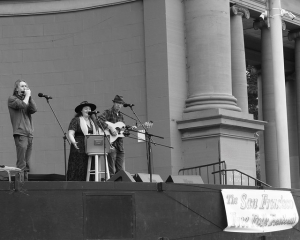
Amelia Hogan and Friends
Amelia Hogan was co-director for 9 years, until 2023, and remains very involved. Two-term mayor of San Francisco Willie Brown called it “San Francisco Folk Music Club‘s gift to the city.” What started as a one-day event expanded to a two-day event, and sometimes contracts again into a one-day event dependent upon resources.
It’s similar to the Northwest Folklife Festival in that it’s entirely volunteer-run. Like Black Americanafest, SFFFF wants to make sure the event is accessible to the broader community. They work to keep costs minimal beyond the cost of the space. “We don’t want barriers to entry, to finding some sort of joy,” Amelia says.
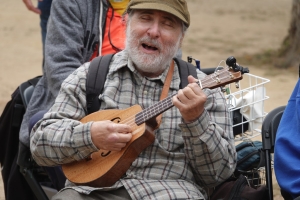
She loves this festival because she can connect with young people, old people, new and known people, people coming off the street. People end up falling in love with Folk, being a part of it, and find ways to keep that love sustainable by volunteering in whatever capacity they can.
There’s a volunteer coordinator who recruits; outreach coordinators looking for sponsors to help support this gift to the community; someone who volunteers to make buttons year after year. SFFFF is a workshop-heavy rather than performance heavy event: dance, children-focused programming; the Storytelling Association of California usually has a presence. People giving workshops can sell their music, art, or classes as they need to, but this is set up as a way to make it available rather than a paid service offered to artists and workshoppers. Amelia said she’s been able to connect with a lot of students for her traditional Irish vocal classes based on people attending her free workshops.
Also in the Central California area is an unconventional festival: the Yerba Buena Gardens Festival is actually what you’d recognize as a concert series.
In the 1970s and 1980s, local redevelopment displaced thousands of underserved citizens – many Filipino immigrants and low-income familes. With support and pressure from activists, the City made a promise that the Yerba Buena Gardens Project would include a public space for arts and community.
The 26th YBGF runs from May to October and presents over 100 free outdoor music, theater, circus, dance, poetry and children’s programs and events at Yerba Buena Gardens. Simply, the Festival programs the outdoor spaces of Yerba Buena, operating separately from YBCA and the benefit district. Check out their calendar here.
Tumbleweed Music Festival is celebrating 30 Years By the River this September 4-6. This gem of Eastern Washington is the brainchild of Micki and John Perry, founders of 3Rivers Folklife Society (3RFS). Tumbleweed takes place right on the shores of the Columbia River – a signifcant locale for Woody Guthrie. The municipality of Richland, WA, recognizes and supports the festival as a draw to the community when not much else is. Richland is semi-arid, so it’s not unusual for it to be 100 degrees over the festival dates.
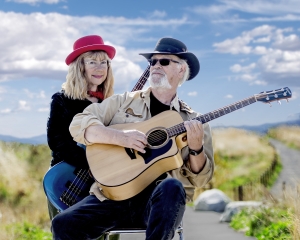
Steve and Kristi Nebel
Stalwart Folk activists Steve and Kristi Nebel told me about their experience with Tumbleweed over the years:
Kristi: We were at Northwest Folklife one year. I remember my eyes falling on a bunch of flyers at the registration area. The following year we applied for it.
We were there, I think, in their second year, and it was a little discouraging to us having driven across a very hot state with no air conditioning in our clunky little van, three and a half hours to get there. There was nobody, nobody listening to us. We thought, “What are we going to do? Why are you going to do this again?” But the last few times we’ve been there, we’ve had excellent audiences because this draws tourism now.
Steve: With JW Sparrow we were a band called The Madrones…did we stay with Micki and John?
Kristi: Yes, we did. And every year when we’d go back, we would get the call from Mickey. I just wanted to say that she did so much work. She did just about every aspect that could be considered – the lifeblood of the entire event. She just worked tirelessly.
Micki Perry and her husband John began their Folk journey in the Hudson Valley of New York. They were close friends with Pete and Toshi Seeger, working with them to help clean up the Hudson River as well as with the Hudson River Sloop Clearwater non-profit organization (Clearwater‘s another festival for you to explore.) In the ’80s they worked with a community organization called SunFest, producing several events: International Festival, a Childrens’ Festival, Chautauqua, and the firest Ye Merrie Greenwood Faire. From there they worked on the Downriver Bluegrass Festival, the first of which featured The Seldom Scene.
Then they settled into the 3Rivers Folklife Society. The first two 3RFS concerts featured Utah Phillips and John Gorka.
Kristi tells me Micki did a lot of communication between the two sides of the Washington state Folk world: East and West, divided by the Cascade mountain range in more ways than geography and music. Tumbleweed’s website enumerates all the aforementioned challenges of organizing a festival.
“Some of the lessons we learned from SunFest’s misadventures were: that to be financially successful it is important to focus on regional acts who can perform for nominal travel costs…community sponsorship, including the City of Richland, is essential to assure ongoing success; and finally, that it is essential to have a solid base of volunteers to organize, produce, and operate the festival, limiting purchased services to the greatest extent possible.”
It normally costs about $35,000 annually to put on the Tumbleweed festival. Funds are raised through a combination of grants, sponsorships from the City of Richland, individuals, corporate and local organizations’ contributions, and fund raisers. Without the donated time and talent of our performers, Tumbleweed volunteers, and these grants, sponsors, and donors, keeping the Tumbleweed Music Festival an event free for all would not be possible. Costs include park rental, rental of things such as tables, food for the Hospitality room (beyond what is donated outright), fees for printing, Advertising, licensing fees, and more.
In my humble opinion, offering this transparency is one of the biggest gifts to the Folk sphere anyone could offer. But let’s get back around to the user side: how a little festival of 4000 people becomes your family.
Kristi: One thing about these local folk festivals is that they’re very social, like, “Oh wow, I haven’t seen…” We’ve been going to Tumbleweed for probably about 12 or 15 years and gotten somewhat acquainted with people from that side of the mountains, primarily the Perrys and Gene Carbaugh, whose family we stayed with.
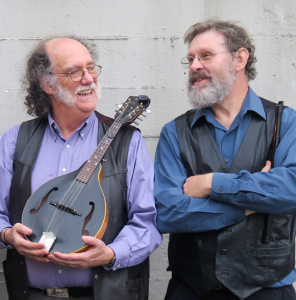
The Whateverly Brothers
Steve: Tumbleweed is really like that. People we’ve known for years, that we don’t see all year. So that’s a large part of that whole experience… And of course, you always are hoping that you are showing your new work to everybody and an opportunity to perform. But it should be said that it’s not a bunch of old fogies; all ages are there now. I see people coming from out of town with their children.
Kristi: They do a “Band Scramble,” which is a way to get different musicians from a diaspora of folk communities together and get acquainted. When you learn a song with somebody in an hour, suddenly you get to know them pretty well.
We finally, after all those years of going to it, decided that we had the time to do the band scramble. They deliberately put together a group of people who will complement each other on instruments that are not all the same. We had a 15-year-old from Spokane who was a bluegrass fiddler, and beautiful young singer-songwriter from LA, and 70-year-old me. It was a real diverse group of people. And this beautiful little girl had this little waltz that her 15-year-old boyfriend wrote. We all learned it in a flash and sang with three-part harmonies. We just knocked’em dead. I couldn’t believe I was on the stage with these very confident people so diverse. We won a whole bag of popcorn!
This year’s Jane Titland Memorial Songwriting Contest is based on the theme “Tumbleweed- Thirty Years by the River.” There’s still time to make plans and head toward Eastern Washington. Any one of these festivals would make a great destination with a little planning. But look closer to home, too: your community needs you to show up and sing along. There’s quite likely magic in your own backyard.
 deb writes, paints, and screams at the stars because the world is still screwed up. She improves what she can with music collaboration, peer-review at Consilience Poetry Journal, or designing & editing books for Igneus Press. Follow @DebsValidation on X and Instagram. Read her self-distractions at FolkWorks.org and JerryJazzMusician.com.
Festivals You Didn’t Know You Needed
NUMBER 48 - From Black Americana Fest to Tumbleweed: New and Old Ways to Engage and Support Folk Culture
June 2026