
Black Waters Are Here Today
Number 78, December 1, 2025
 Today’s blog is about the prophetic words of the elders who put protest into song.
Keeping the thread alive from these song pioneers is important, because the effects of the punishing circumstances are still with us today in many situations, most of them causing suffering for populations around the world.
Jean Ritchie wrote the landmark and prophetic “Black Waters” in 1967 to piercingly call out the coal industry for ruining the land and livelihoods of the inhabitants of Eastern Kentucky in their effort to establish the devastation of strip mining. Below is an excerpt from our Ritchie tribute concert “Singing the Moon Up: The Voice Of Jean Ritchie” that outlines just how the coal companies dominated the landowners and tricked them into “licensing” the land in exchange for desperately-needed income. This license then allowed the companies to begin strip mining at will. This devastating process made the land ultimately unusable, worthless, and in many cases, uninhabitable.
From “Singing the Moon Up: The Voice of Jean Ritchie.”
Dialogue by Steve Rankin and Jean Ritchie
Jean’s people in Perry County lived much as pioneers. They owned large tracts of land which provided food and timber. Their homes were simple, their wants were easily satisfied, but things were destined to change. The coal mining companies came.
Jean’s grandfather, Than Hall, along with almost all his neighbors, sold the mineral rights to his land to the “friendly” likable man who said they represented a company who thought there might be “a little coal on your land worth getting out.” In addressing the landowner, the company said it was willing to “take a big chance and pay you, say, fifty cents an acre, and since you got better than a thousand acres, this amounts to around five hundred dollars!”
That was a handsome sum in those days. For a man with a dozen children, it was also impossible to refuse. He signed an agreement to give up coal rights only, but the long form deed included all minerals, even salt water, and has a guarantee from the farmer to grant access to the mines.
Jean’s grandfather and his neighbors had no way of foreseeing that mining would not always take place underground, leaving the surface unspoiled. The long form mineral deeds were empowered to withdraw subjacent supports, thereby causing the surface to subside and fracture. They could build roads wherever they desired, even through lawns and fertile vegetable gardens. They could sluice poisonous water from the pits onto crop lands. They could hurl out from their washeries clouds of coal grit which settled on fields of corn, alfalfa and clover and rendered them worthless as fodder.
Ultimately the companies were absolved from all damages.
From Jean Ritchie:
“This day, I look at my mountains, and I wonder what kind of memories this day’s children will have, and where they’ll find their joy of living. This day’s children no longer love the land, and who can blame them? They can’t wait to be old enough to leave and get a job in the big cities, and when they come home to visit, if they wade the branch, they find brackish, black mine water, with no sign of life.”
BLACK WATERS
By Jean Ritchie
I come from the mountains, Kentucky’s my home
Where the wild deer and the black bear so lately did roam
By the cool rushing waterfalls the wild flowers dream,
And through every valley there runs a clear stream
Now there’s scenes of destruction of every hand
And there’s only black waters run down through my land.
Sad scenes of destruction on every hand
Black waters, black waters run down through the land.
O the quail, she’s a pretty bird, she sings a sweet tongue
In the roots of tall timers she nests with her young
But the hillside explodes with the dynamite’s roar
And the voices of the small birds will sound there no more
And the hillsides come a-sliding so awful and grand
And the flooding black waters rise over my land.
In the rising of the springtime we planted our corn
In the ending of the springtime we buried a son
In the summer come a nice man, said “everything’s fine –
My employer just requires a way to his mine”
Then they threw down my mountain and covered my corn
And the grave on the hillside’s a mile deeper down
And the man stands and talks with his hat in his hand
As the poisonous water spreads over my land.
Well I ain’t got no money and not much of a home
I own my own land but my land’s not my own
But if I had ten million, somewhere’s thereabouts
I would buy Perry County and I’d run ‘em all out!
Set down on the bank with my bait in my can
And just watch the clear waters run down through my land.
Well, wouldn’t that be like the old promised land?
Black waters, black waters no more in my land!
TODAY: Climate change is being challenged by wealthy fossil fuel producers.
From the New York Times:
Many Fighting Climate Change Worry They Are Losing the Information War
Shifting politics, intensive lobbying and surging disinformation online have undermined international efforts to respond to the threat.
Oil-rich countries, including the U.S., are downplaying scientific consensus that the burning of fossil fuels is dangerously heating the planet.
When nearly 200 nations signed the 2015 Paris agreement, acknowledging the threat of rising global temperatures and vowing action, many hoped that the era of climate denial was finally over. Ten years later it has roared back, arguably stronger than ever.
As delegates wrapped the annual United Nations climate talks last Saturday, those who have campaigned to reduce the use of fossil fuels expressed growing alarm that forces arrayed against them are gaining ground in the information war.
The oil, gas and coal industries continue to downplay the scientific consensus that the burning of fossil fuels is dangerously heating the planet. It’s a strategy that has been echoed by oil-rich countries such as Russia, Saudi Arabia and — under the Trump administration — the United States.
President Trump mocks global warming as a hoax, cheered on by a chorus of influencers online who regularly promote disinformation on social media platforms that once tried to curtail it. While such views have long been dismissed as conspiracy theories, their influence on the global policy debates has clearly grown.
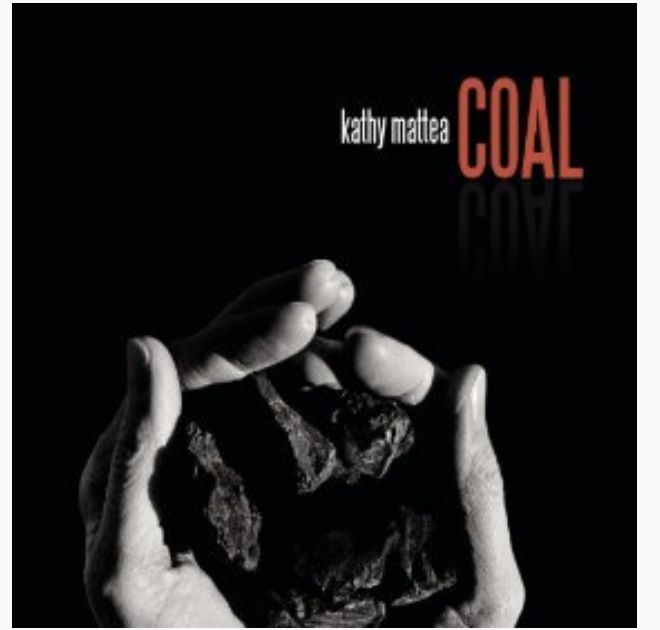
In her 2008 album “Coal,” Country star Kathy Mattea, originally from West Virginia, carries the torch today. Including Ritchie’s “The L&N Don’t Stop Here Anymore” and “Blue Diamonds Mines,” Mattea also offers other gems of the genre such as “You’ll Never Leave Harlan Alive” by Darrell Scott and “Dark as a Dungeon” by Merle Travis.
We have Mattea to thank for keeping alive the message of the heartbreak and suffering the coal industry has caused for generations.
As always, thanks for reading!
Love and Blessings,
Susie
________________________________________

Photo by Cam Sanders
Award-winning recording artist, Broadway singer, journalist, educator and critically-acclaimed powerhouse vocalist, Susie Glaze has been called “one of the most beautiful voices in bluegrass and folk music today” by Roz Larman of KPFK’s Folk Scene. LA Weekly voted her ensemble Best New Folk in their Best of LA Weekly for 2019, calling Susie “an incomparable vocalist.” “A flat out superb vocalist… Glaze delivers warm, amber-toned vocals that explore the psychic depth of a lyric with deft acuity and technical perfection.” As an educator, Susie has lectured at USC Thornton School of Music and Cal State Northridge on “Balladry to Bluegrass,” illuminating the historical path of ancient folk forms in the United Kingdom to the United States via immigration into the mountains of Appalachia. Susie has taught workshops since 2018 at California music camps RiverTunes and Vocáli Voice Camp. She is a current specialist in performance and historian on the work of American folk music icon, Jean Ritchie. Susie now offers private voice coaching online via the Zoom platform. www.susieglaze.com
Black Waters Are Here Today
Number 78, December 1, 2025