

Black Americana Fest: Dusky Waters
"I'm able to be because of who they were" ~ D. Waters

Dusky Waters, photo by Analiese De Saw
Black people make up an extremely small population of folk festival goers and folk festival musicians yet the music is in our DNA. My article “Festival Season: Through The Eyes Of Black Folk” describes shared experiences among Black musicians and people of color in general on what it feels like to be one of the few of us at music festivals. Sometimes the only one. It isn’t easy and change is long overdue. Dusky Waters and Teena May decided to do something about it. Get more Black people to Folk music festivals and show them they belong!
Dusky Waters is a talented Black Banjoist, a lover of music, an innovator, a creator, an all around inspiring human standing in the light of her ancestors, AND one of the founders of Black Americana Fest happening September 25th and 26th in New Orleans! This is the third year since its inception and with every year it grows more and more in brilliance and depth. I had the chance to sit with Dusky Waters and find out how this all began, what inspires her work, where she comes from, and what is in store for Black Americana fest this year.
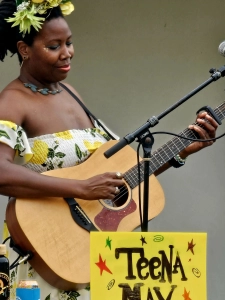
Teena May, photo by Analiese De Saw
Dusky met Teena May and, both being Black Americana country music artists who felt they didn’t fit in anywhere in the Americana music scene, they decided to create the space they wished existed. It was then that the “experiment” known as Black Americana Fest began to take shape. They wanted to create a space to tell the untold stories and provide a space for other Black artists to do the same.
Most people don’t realize the foundation of music— not just Blues and Jazz, but also country music, bluegrass music, came from our Black ancestors. I know I didn’t. Pretty sure Dusky and Teena felt the call, like I did, to this Country Folk Americana music, and felt torn love about it on the inside like something was off but wasn’t off. Then the exclusion and othering that comes with being Black and loving this music we were taught doesn’t belong to us. Yet, it actually does. We come from this music so it makes sense to be drawn to it.
It should be but it isn’t common knowledge that many great Americana musicians sat at the feet of unknown Black fiddlers, banjoists, and guitarists, learning from them: Black musicians like Tee Tot Payne, who taught Hank Williams; Gus Cannon, who mentored Johnny Cash, Arnold Shultz, who influenced Merle Travis & Bill Monroe; Leslie Riddle who aided the whole Carter Family by not only collecting songs within Black communities and teaching them these songs but Leslie Riddle also taught the guitar style to the Carters who later became known as the first family of country music.
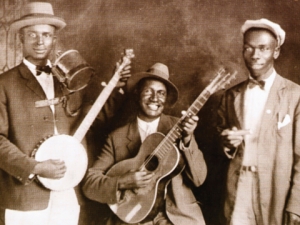
Cannon’s Jug Stompers: Gus Cannon, banjo & jug; Ashley Thompson, guitar; and Noah Lewis, harmonica
Most people are unaware Black people are at the roots of Americana music because it was designed that way. It was designed by the powers that be to keep us in the dark. At the start of the recording industry, segregation had its hold on music. Segregated music got its foundation through what were called “Race Records” and “Hillbilly Records” and this was the beginning of the misconception that would continue into today.
The record companies pretty successfully tried to erase Black people from country music. Black musicians were replaced with white stand-ins for the album photos, and the Black musicians who played on these early recordings were not mentioned in the liner notes. This was all about selling records in these created “genres” to people the record companies thought should be listening to it: Race records for Black people and hillbilly records for White people.
All of us have been force-fed what we are supposed to listen to and supposed to like and supposed to play since the beginning. The truth is still being unearthed today through movements and organizations like The Black Banjo Reclamation Project, Black Banjo & Fiddle Fellowship, and Black Americana Fest.
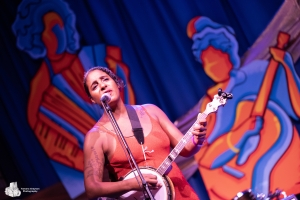
Leyla McCalla at Black Americana Fest 2025, photo by Tamara Grayson
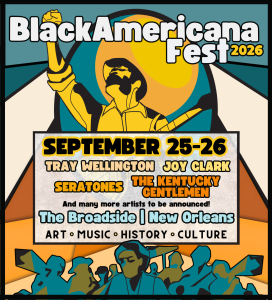
Three years ago, Dusky Waters and Teena May took the next step and created Black Americana Fest, where Black people and Black musicians can come and gather, learn, experience the joy of this music and feel welcomed, celebrated, and heard.
BLACK AMERICANA
I asked Dusky how they define Black Americana and her response was that Black Americana music is rooted in the Black storytelling tradition. The music reflects the Black experience in this country. The instrumentation is typically traditional acoustic stringed instrumentation consisting of fiddle, banjo, guitar, etc.
 WHY A BLACK AMERICANA FEST
Growing up feeling othered, Dusky struggled to find a space where she felt comfortable and safe. She states: Sometimes in life you gotta create the world that you wanna live in; actually always in life we need to create the world that we want to live in.
Dusky is now living the life her ancestors couldn’t. Her great-great-great grandfather was emancipated. Her family was among the first integrated into formerly all-white schools and Dusky herself fought against racism, segregation, and oppression, finding herself now manifesting change in ways her ancestors couldn’t have known. Currently she is working on an album when her ancestors couldn’t make an album. Dusky is carrying the torch forward and paving the way for others to do the same. Creating spaces her ancestors may not have even dreamed of.
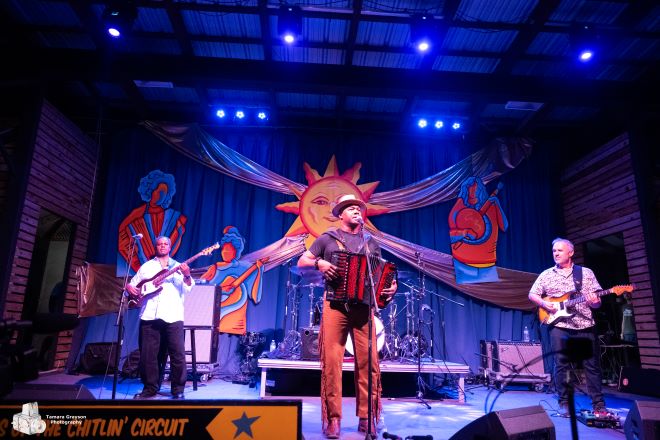
Black Americana Fest 2025, photo by Tamara Grayson
WHAT TO EXPECT AT BLACK AMERICANA FEST THIS YEAR
Amazing music! Plan on being educated. As a space for untold stories we can expect to hear storytelling through music by incredible artists like Tray Wellington, Joy Clark, and The Black Banjo Reclamation Projects’ Seraphina Perkins and Diedra Hall. There will be art, kids programming, and more. The theme this year is protest traditions in Black Americana music. We can expect to hear music reflecting this theme.
There is always a lot for all of us to learn. Joy, laughter, celebration for sure. “The mission is to make Folk festivals more inclusive, but also to create our own table in a safe space where we can be together.”
“I look forward to an imagined future that feels really far away… where in this country we can all be proud of this common heritage we share”
IS IT ONLY FOR BLACK PEOPLE?
Not at all! Dusky shares that “this festival is for everyone! I look forward to an imagined future that feels really far away… where in this country we call all be proud of this common heritage we share”. Yes, Black Americana Fest is focused on cultivating a Black audience and creating a space for Black musicians to be seen and heard and for the Black experience to be shared but this festival is for everyone. The work of reclaiming lost narratives and celebrating them is important for all cultures, especially for Black folk in America, where the industry intentionally erased them to control profit and status. It’s time to flip the script and for us all to reclaim our collective truth.
Come to Black Americana Fest! Be ready to shake a tail to some incredible music and have the good times 😉 Bring your curiosity— there is so much to learn. Bring your children— show them the music and introduce them to the Folk community. If you can’t come, buy a ticket anyway. Black Americana Fest will make sure someone is able to use that ticket to expand and explore their world. Consider yourself invited to the party!
If you’d like to do more, consider volunteering or donating: you can find more information on the website by clicking on Volunteer or Donate.
CLICK ON THE IMAGE TO SEE MORE PHOTOS
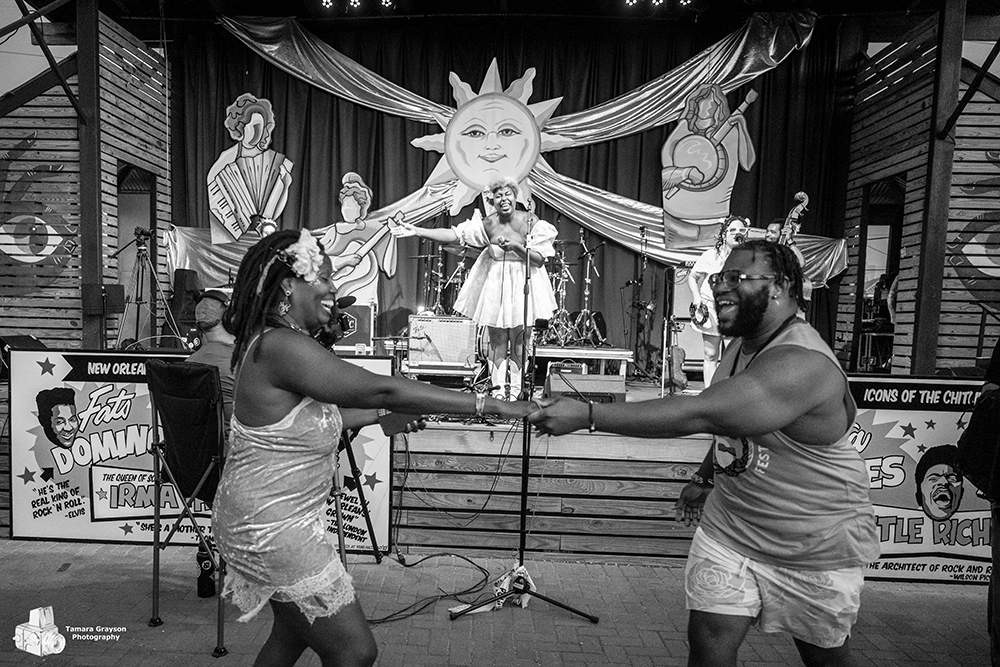
Black Americana Fest 2025, photo by Tamara Grayson
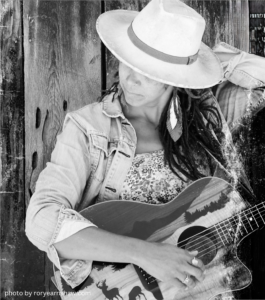 Azere Wilson unravels tangled herstory to find her identity as a mixed race Black American woman. Growing up without the Black side of her family, music helped her find her voice and use it. She shows herself coming out the other side raw, vulnerable, inspired, beautifully connected to her lineage.
Black Americana Fest: Dusky Waters
"I'm able to be because of who they were" ~ D. Waters