Protest Music
The Return of the Sixties
 Over the last few years, the world has witnessed the invasion and ongoing war in Ukraine, the horrific murder of Israeli civilians, the genocide of Palestinians in Gaza, the war in Somalia, and a relentless series of environmental catastrophes. In the United States, masked, jack‑booted, combat‑garbed troops have descended on American cities and towns—grabbing young women off street corners, battering down doors, dragging occupants out of their homes, rounding up hundreds of workers at factories and plants, snatching young children from their schools, forcing tens of thousands of people into detention centers without adequate facilities, food, or health care, and even murdering civilians in the streets.
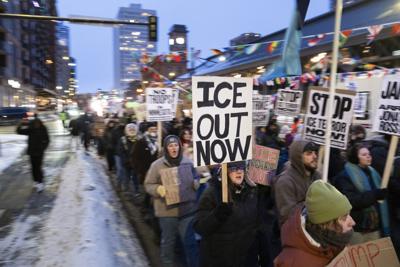
Americans have responded by trying to keep their neighbors safe and by organizing protests and demonstrations across the nation. Music – protest music in particular – has taken on a renewed importance not seen since the 1960s. Protest music plays a vital role in supporting people who are trying to counter abuses of power. Music provides inspiration, solace, and hope. It can document and memorialize events. And it can offer historical perspective. Songs from past crises remind us that we have faced similar issues before and can suggest possible responses. For example, Arlo Guthrie’s song about President Nixon clearly echoes today.
The last year has been called chaotic by many, but perhaps a better term would be incoherent. Chaos implies that there is no structure or purpose to what is happening. But this chaos is carefully orchestrated and used to advance an authoritarian agenda. Elements of this program are often incomprehensible – incoherent – from the outside, and that is exactly the point: it leaves opposition disorganized and ineffective.
Events in Minneapolis, in particular, have sparked an extraordinary outpouring of citizen anger and many new protest songs by well‑known artists such as Bruce Springsteen, Billy Bragg, and the new incarnation of Phil Ochs, Jesse Welles
as well as lesser‑known but no less important figures such as Katie Dahl, Alice Di Micele, Joe Stephenson, and many others.
Protest music plays an important role in raising awareness of events and issues, rallying support among the wider population, and keeping hope alive for an end to oppression and the belief that a more positive future is possible. Songs will continue to be essential in mobilizing opposition to current policies and in rallying support for alternatives in the upcoming elections.
Ron Cooke is the author of a book of short stories and poems entitled Obituaries and Other Lies (available at Amazon); writes a well-received blog (ASSV4U.com/blog); and hosts a weekly radio show called Music They Don’t Want You to Hear on KTAL-LP in Las Cruces, NM. He is also a founding director of A Still Small Voice 4U, a not for profit supporting arts, culture and community that presents folk concerts, sponsors artists, festivals and community groups. Ron is an avid cyclist, racer, blogger, sculptor and ne’er-do-well.
Protest Music
The Return of the Sixties