
250th Anniversary – Songs of a Country Forged in War
“Record Unit 95, Box 45, Folder 16”
As we take note of the 250 years since the founding of the nation and the promulgation of the Declaration of Independence, there are numerous ways to commemorate the anniversary and the development of the nation over that time. One might look at the legal framework that was developed in the colonies, built upon English common law and culminating in the Declaration of Independence and the US Constitution.
Or one might consider the political and social ramifications of what presented itself as the first constitutional democracy, and the continuing debate about a democracy versus a republic. It is also possible to trace the development and history of the nation through music. “Yankee Doodle” is often considered the anthem of the American Revolution and is a classic folk song in that it was developed by the British to mock the insurrectionists, who in turn took it and, in a classic example of the folk process, transformed it into their own anthem.
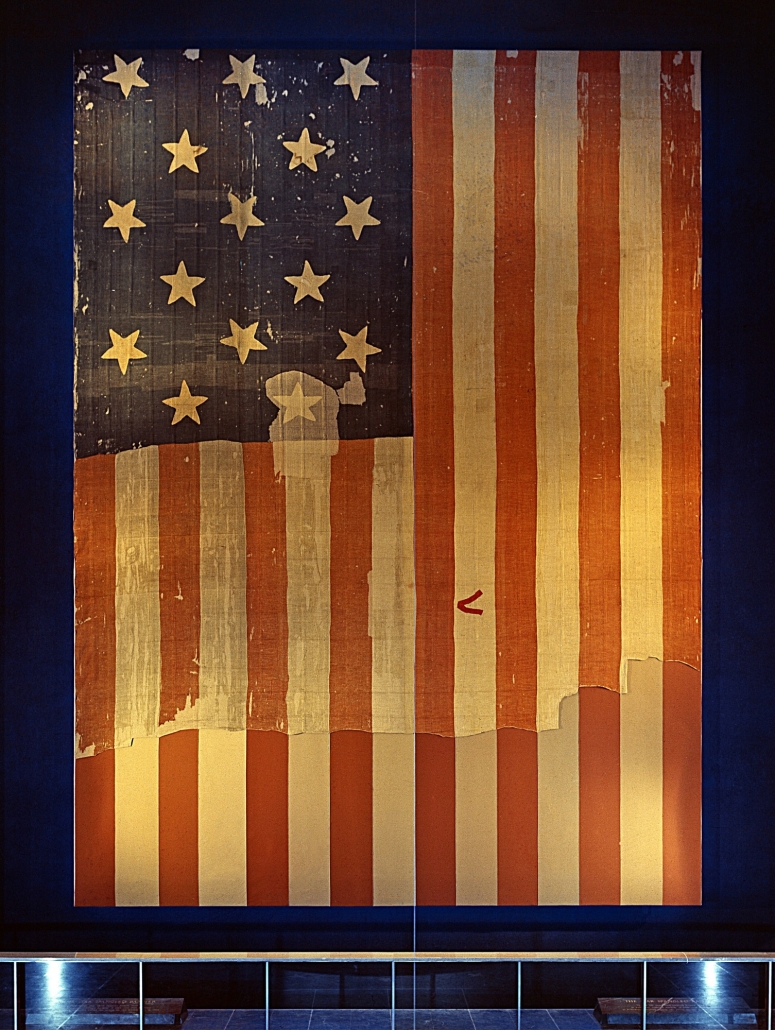
Or consider that in 1814 Francis Scott Key wrote a poem after witnessing the Battle of Baltimore, which was later turned into a song that in 1930 became America’s official national anthem, at least in part to save the country from adopting the rather syrupy “America the Beautiful.”
Every society develops its own characteristic music, its own “folk music” and America has been unusually prolific in creating new styles and genres. This has been driven by the diversity of the people who have occupied the land, from the music of the many groups of Indigenous peoples to the music of Spain and Mexico brought north by Spanish colonists beginning in the late 1500s.
The English, the Irish, the Scots, and others brought a wealth of musical traditions which, in the musical melting pot of America, developed into a variety of forms from Appalachia to New England and beyond. Perhaps most notable are the musical traditions and developments brought by people of African and the Caribbean. It is these traditions that developed into American-style blues, folk, jazz, rhythm and blues, pop and rock and roll, and more recently funk, hip-hop, and rap.
Unfortunately, the history of the United States over these 250 years can also be told through the wars it has engaged in and the songs those wars generated. The first war of choice, the first war of naked aggression was the US invasion of Mexico commencing in 1846. The most enduring song from the Mexican-American War is “Green Grow the Lilacs,” based on an Irish folk ballad perhaps brought by the Irish Saint Patrick’s Battalion.
But it was the Civil War brought music to the forefront, both for the armies and on the home front. The Civil War was our only conflict fought entirely on US soil. Even the Revolution had battles in Canada, the Caribbean, and in Europe as the British sparred with US allies France and Spain. The South adopted “Dixie” as both a rallying cry and a battle song. The North created a number of new or revised songs during the conflict, including “The Battle Cry of Freedom,” composed by George F. Root in 1862; the “Battle Hymn of the Republic,” written by Julia Ward Howe in 1861 and set to powerful religious and anti-slavery lyrics to the marching tune of “John Brown’s Body” and “When Johnny Comes Marching Home,” based on a popular 1863 Irish-American folk tune written by Irish-American bandleader Patrick Gilmore and deposited in the Library of Congress on September 26, 1863. This song of hope was popular in both the North and the South.
After the Civil War, the US. increasingly turned its attention overseas as it built an empire and became a global military power.
Ron Cooke is the author of a book of short stories and poems entitled Obituaries and Other Lies (available at Amazon); writes a well-received blog (ASSV4U.com/blog); and hosts a weekly radio show called Music They Don’t Want You to Hear on KTAL-LP in Las Cruces, NM. He is also a founding director of A Still Small Voice 4U, a not for profit supporting arts, culture and community that presents folk concerts, sponsors artists, festivals and community groups. Ron is an avid cyclist, racer, blogger, sculptor and ne’er-do-well.