
Kristofferson at 90-Still Restless and Alive in Song
 Singer-songwriter Kris Kristofferson, who would have turned 90 on June 22nd, was known for saying, “heroes happen when you need ‘em.” If that is so, then I’ve needed Kristofferson — in persona, songs, stories, and poems — for the last 60 years. After writing so many tributes for artists who have left us for that song circle in the sky, none have resonated more deeply than this poet, picker, and “walking contradiction, partly truth and partly fiction.” Over the nearly two years since his passing, I have slowly re-learned his songs, which have become like unheard prayers I have sung in my personal woodshed during quiet, sorrowful, and sometimes joyful cloistered hours.
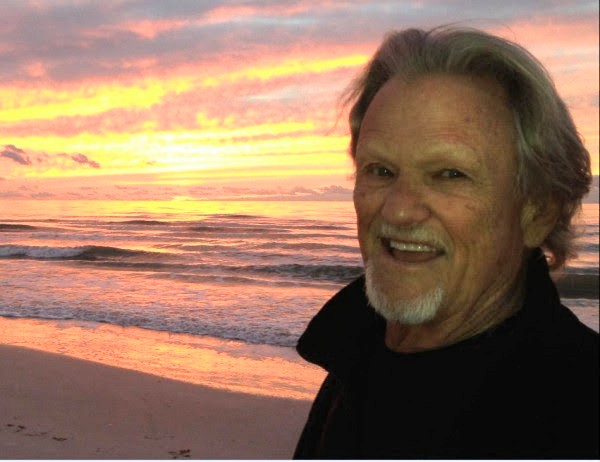
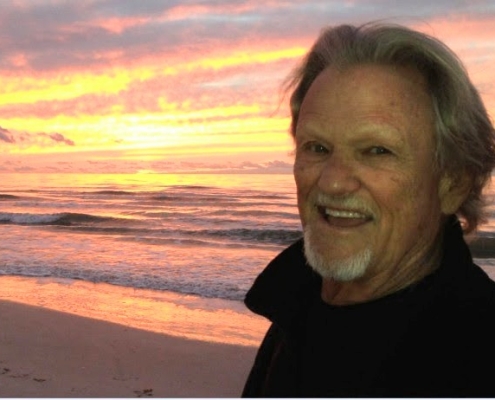
I find myself at a continual turning point in my own life, marking an entrance into an autumn that I haven’t quite begun to fathom. I only know, when I see the age in his eyes in old photographs and hear the shaky weariness in his voice and feel the fight in his spirit in his final recordings, I know it’s all going to be all right, this business of growing old and facing mortality. If I can do it with half the grace of Kris Kristofferson, I’ll be a happy man.
My first recollection of Kristofferson isn’t “Me & Bobby McGee” by Janis Joplin. I heard his first song on an album called Hello I’m Johnny Cash, in 1970. It included a unique song about a songwriter’s conversation with the devil — titled “To Beat the Devil.” In it, the devil derides the hero by saying his songs will never make a difference. It was the first time Johnny Cash recorded a song by Kristofferson, who, a few years earlier, was a janitor in Columbia Studios in Nashville and a National Guard helicopter pilot. The now-legendary story has Kristofferson landing his helicopter on Cash’s front yard to persuade him to listen to a tape of his songs. Cash later admitted this got his attention. He confessed that he used the demo tapes given to him by aspiring songwriters to skip, like stones, across the lake on his property. He most likely did this with “Sunday Morning Coming Down,” before Kris got enough gumption to land his helicopter in front of Cash’s home.
In the summer of 1970, the wild years of the late ‘60s were dying down. Rock music was becoming a corporate business that would soon be regulated by economics and commercial interests. The one community from the 60s counterculture who remained true to themselves in the summer of 1970, a year after Woodstock, was the singer-songwriters. They held a fascination for me. The song, “To Beat the Devil,” stood out in my imagination
So, when I stumbled on the writer of the song on the Smothers Brothers’ summer show’s A Taste of Poets Corner segment, I was surprised to see a down-to-earth, bohemian-looking, long-haired, deep-bass singing, soft-spoken singer-songwriter named Kris Kristofferson. He was equal parts William Blake and Hank Williams. He may have played two or three songs. I don’t remember what they were as much as I remember connecting with spirit, the way he held the guitar and softly sang his words without any sense of ego or flash. When I saw his face darkly peering out at me, cigarette in hand, from the cover of his first album in a local record bin, I bought it immediately.
In context, the broadcast was before most of Kristofferson’s most well-known songs had become hits. Or they were becoming hits like Johnny Cash’s “Sunday Morning Coming Down,” and Ray Price’s “For the Good Times.” (Both were released in 1970.) But the songs that stood out from the rest were the lesser known, “Blame It on the Stones,” “Best of All Possible Worlds,” “Just the Other Side of Nowhere,” “Darby’s Castle,” “Casey’s Last Ride,” and, of course, “To Beat the Devil.” Kristofferson’s version of the song opened with a narrative about a friend in a studio and was close to dying. That friend was Johnny Cash. But it was a tale of the songwriter being challenged by the devil at the bar to keep writing songs even though no one was listening.
His songs — all of them — did something beyond what any songwriter had done to my imagination, including Bob Dylan. Kristofferson was the first songwriter I heard who showed what a writer of literature could do: create an alternative world through a story, complete with characters with their own sense of soul and truth. This album and those that came after it — including The Silver-Tongued Devil, Border Lord, Jesus Was A Capricorn, and Spooky Lady Sideshow — all had the same effect. These albums formed the foundation of his legacy in song. When he would lose his way in celebrity and stardom, it was the sense of soul he created on those albums that he would return to and would allow him to create more of the same on latter-day classics like To the Bone, Repossessed, and A Moment of Forever.
Even Kristofferson’s film career, while admittedly inconsistent, contains work that is an extension of his songs. Most obviously is the little- seen Cisco Pike, his second film with Gene Hackman, Karen Black and Harry Dean Stanton. It is the story of an L.A. singer-songwriter turned drug dealer. Later, he worked extensively with Sam Peckinpah, most memorably in Pat Garrett and Billy the Kid — arguably Peckinpah’s best film and maybe Kristofferson’s as well.
But his music became his anchor. His band — including Donnie Fritts, Billy Swan and Stephen Bruton, known as the Border Lords — were always by his side, fanning the flame of his songs. His concerts were testaments to his character and his strength as a performer, songwriter, and outspoken critic of injustice. In concert, he had a way of connecting with his audience similar to how he pulled listeners into the song’s alternate reality. At his most dynamic, he carried himself onstage like the legend he has always been. Onstage, he becomes more John Wayne and Henry Fonda than country star — a desperado with the breath of a song to guide him.
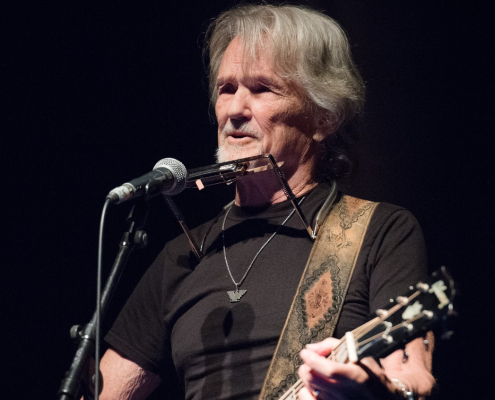
Over the last 15 years of his life, he began to appear alone, with his guitar. His films became fewer and his concert appearances doubled.
I saw his 2011 show in Glendora, California, reviewed in FolkWorks. After the show, I received an email of appreciation from his wife, Lisa Kristofferson. During that matinee show, for two hours, he held the audience in the palm of his hand, with his low, deep voice, the soft strum of his guitar, and the magic of his songs. He commented during that show that the enthusiasm of the audience made it feel more like a Saturday night at a honky-tonk than a Sunday afternoon. I’ve seen him many times with his band over the years, but this little show was as good as the rest of them. In some ways, it may have been better.
It was in this auditorium in Southern California, which Kristofferson managed to transform into an intimate room, where he became the original artist, I saw on television in 1970. Once again, he created a special moment — an intersection, where art and story, song, voice, soul and spirit create an alchemy that is greater than anything we could imagine would come from just a voice and a guitar.
Kristofferson’s final albums, This Old Road, Closer to the Bone, and Feelin’ Mortal, are recreations of that matinee show I saw in 2011. His voice, warm and up-close, sings the words to new songs that confirm his unique gifts . The world that only Kristofferson was able to create was, once again, there in the sonic realm. It’s a place with sawdust-floored honky-tonks, preachers and pushers, devils and wounded angels, the obsessed, the possessed, and the repossessed. It’s a place where justice and truth are a thing we can depend on, not to be longed for like some unattainable ideal. It’s a place for heroes — the kind who happen when you need ‘em.
Today, I know he would be sending these words to our country as the nation turns 250. It’s a song recorded by Johnny Cash. Today it rings loud and clear:
Anthem ’84
If you’re looking for a fighter who’ll defend you
And love you for your freedom, I’m your man
And I ain’t gonna leave you for the crazy things you’re doing
Don’t ask me to lend a helping hand
You were such a pretty dream as I remember
You were young and strong, and God was on your side
The vision slowly faded like the wonder from your eyes
You traded your compassion for your pride
But I still believe in all that we believed in
And I pray to God that you will in the end
You’ll see the golden chances that you’re wasting
Be the loving beauty that you can
But I still believe in all that we believed in
And I pray to God that you will in the end
You’ll see the golden chances that you’re wasting
Be the loving beauty that you can,
Now Kris is gone, I wish I could tell him how important his music and his life has been to my own crazy experience. How, when there’s grief and turmoil, I’ve been able to turn to the songs and the sound of his deep, rough voice, singing his words of truth with such courage, to find the comfort and the strength I’ve needed to carry on.
Most of all, it’s the legacy of songs Kristofferson that is most important. Maybe, in some future time, some lonely kid will pick up that first record and hear those songs for the first time. Then Kristofferson will certainly know that he has beaten the devil.
Kristofferson has shown through his life that it is always the truth of the song that matters. Thank you, Kris, for teaching us all this life lesson.
As he has said, “Tell the truth, sing with passion, work with laughter, love with heart, ‘cause that’s all that matters in the end.”