Susie Glaze on Blending Styles, Collaboration, and Community
Susie Glaze discusses collaboration, repertoire, and performing with the Scottish Fiddlers of Los Angeles for their 45th anniversary concert this April
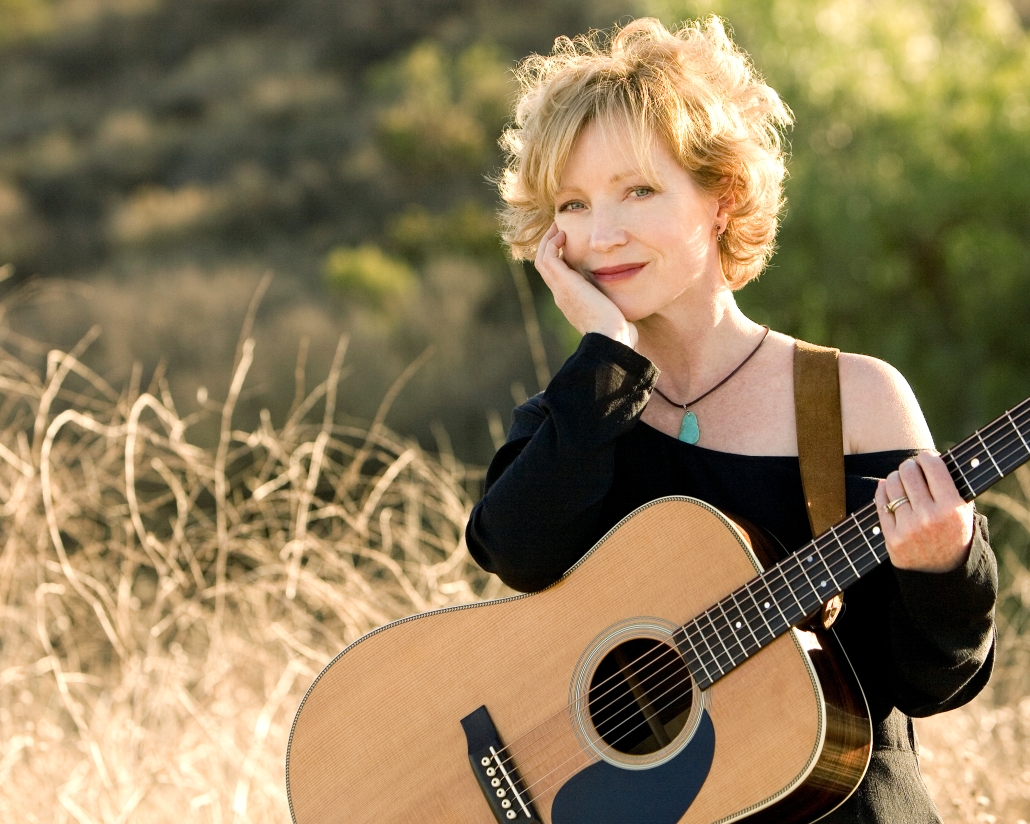
 Award-winning vocalist Susie Glaze works across the American roots landscape, developing a style that draws from folk, bluegrass, country, and beyond. With the Susie Glaze New Folk Ensemble, she brings together these influences using a range of instruments and approaches.
Glaze describes the group as “chamber music gone folk,” a small ensemble that “sounds orchestral” in its approach to songs. That sensibility carries into a recent collaboration with the Scottish Fiddlers of Los Angeles, where her ensemble’s song-driven style meets a large, tune-based ensemble of more than 50 musicians.
In the following interview, Glaze reflects on her musical path, her approach to repertoire, and the process of collaboration, as the two groups come together for the Scottish Fiddlers’ 45th anniversary concert on April 11.
Jody Gunn (JG):
For readers who may be new to your work, how would you describe the Susie Glaze New Folk Ensemble and the range of styles it brings together?
Susie Glaze (SG):
I call us an Americana Folk Fusion band. Sometimes that’s a little confusing because fusion is a genre, but I use it because it aptly describes what we do. We fuse different kinds of genres that relate to one another, like country, bluegrass. We even do a little bit of jazz standards and some Texas swing. It’s like a big tent.
I’m glad the genre Americana was developed to describe this range. It includes rock and roll, blues, jazz, folk, bluegrass, and country, and that really reflects what we do. It’s based on the fact that we are very eclectic musicians.
We’re intrigued by the music we find when researching little-known songs that we cover, and there’s also original writing in our group. Over the 20 years we’ve been together, we’ve evolved significantly. When we first started in 2003, we were basically a bluegrass band, a quintet, and our lead guitarist, Rob Carlson, was writing original music for us.
We moved away from that because bluegrass began to feel limiting when we were interested in more unique material. The skillset of our players is wide, and that inspires us to be more creative.
We call it the New Folk Ensemble because we have new songs and are rooted in Americana and folk. I describe it as chamber music, meaning a small group doing things that sound orchestral. We use extended instrumental sections and create our own versions of songs that were originally done very differently. I call it “chamber music gone folk.”
JG:
How did you find your way into this kind of music, and what were one or two moments that influenced the direction you took?
SG:
I grew up in Middle Tennessee, where country music and bluegrass were all around me. In the late 1960s and early seventies, there was a lot of energy around country music, while bluegrass was more of a fringe movement.
I pursued a theater degree and lived in New York City for a long time. That’s where I started hearing more bluegrass influences in country artists. It was more acoustic and less electric, and I gravitated toward it because of storytelling, coming from acting. I worked on productions related to bluegrass music. Later, my husband at the time and I moved to Los Angeles to step away from New York life. He worked as an actor, and I stepped back from acting.
After that marriage ended, I reconnected with my current husband, Steve Rankin. He invited me to join his bluegrass group, The Eight Hand String Band. It was a shock to be given a guitar I could barely play and be put on stage singing without a character to hide behind, but I realized I loved it.
We recorded an album, and I sent it to Jean Ritchie, who became a mentor. That group became a backing band for my album Home on the Hill, which I originally thought would be a one-time project.
Then we met Rob Carlson, who brought original songs, leading to what became The High Lonesome Band. We toured extensively and were rooted in bluegrass. Around 2015–2016, we began shifting toward Americana. After Rob left, we continued as a quartet and developed the repertoire we have now.
JG:
Your repertoire includes both traditional material and original songs. How do you decide what to include in your programs?
SG:
We use two criteria. First, whether the song speaks to us and whether we feel we can bring something new to it. Second, whether the song is obscure and deserves to be heard.
A good example is “Me and the Eagle” from The Horse Whisperer soundtrack. It was cut from the film but included on the CD. We felt we could bring something unique to it.
We call these “diamonds in the rough,” songs by great songwriters that are little known. That has shaped our repertoire. We draw from artists like Linda Thompson, John Prine, Steve Earle, Jean Ritchie, and lesser-known Dolly Parton songs.
We also did a jazz standards project with Joe Craven called Do You Have This in Blue?, featuring songs associated with artists like Ella Fitzgerald and Nat King Cole.
JG:
When preparing a song or piece for performance, what elements do you focus on most?
SG:
We think about instrumentation first. Our group covers a wide range, including mandolin, guitar, bouzouki, fiddle, penny whistle, autoharp, dulcimer, and bass. We choose combinations that best serve the song.
We also think about how songs can be combined into medleys. It’s like an orchestral palette, choosing what best brings the song to its potential and allows us to contribute something new.
JG:
What interested you in collaborating with the Scottish Fiddlers of Los Angeles for their 45th anniversary concert?
SG:
It’s been a great experience to be part of what is essentially an orchestra. We’ve been learning jigs and reels and working as instrumentalists, which is not our usual approach.
We normally work with songs, not tunes. Instrumentals are usually part of a song structure, so this has been a technical challenge and a thrilling one. Singing with the fiddlers and having them play behind me is a goosebump experience. I haven’t experienced that before.
JG:
From a musical perspective, where do you hear common ground between your ensemble and the Scottish Fiddlers of Los Angeles?
SG:
We both draw from historical forms and develop them creatively. There is also a shared sense of community. Folk music brings people together, whether through lyrics or instrumental traditions. I study Jean Ritchie, and her work connects British and Appalachian traditions. That lineage ties into what both groups are doing.
JG:
Can you describe a moment in rehearsal where something clicked musically between the two groups?
SG:
Yes, especially in understanding how arrangements differ. We use verse and chorus structures, while the fiddlers work with repeated sections of tunes.
We’ve had to adapt how we communicate arrangements and integrate both approaches.
When we all play together, especially when I’m singing with them, it’s a peak experience. There’s a strong sense of connection and community.
JG:
What will your group be performing during the concert?
SG:
We’re doing “Heartland” by Denise Hagan. We’re also performing “Both Sides the Tweed,” “Follow the Heron Home,” “The Parting Glass,” and “Auld Lang Syne,” mostly with the fiddlers. “Heartland” is the only piece we do on our own.
JG:
What might surprise audiences about hearing these two groups together?
SG:
They may be surprised by how a small acoustic ensemble blends with a large orchestra, both as players and singers. They will also hear familiar material interpreted differently.
JG:
In your view, what role do collaborations like this play in the broader folk music community?
SG:
They show there are no barriers between us. Music builds community, creates joy, and connects people. It reminds us of the importance of giving and sharing.
JG:
Is there anything about this collaboration or the concert that you’d especially like audiences to know?
SG:
To not be isolated. To join in, find community, be creative, and not lose heart.
For more information on Susie Glaze and the Susie Glaze New Folk Ensemble, visit:
https://www.susieglaze.com/
For concert details and tickets for the Scottish Fiddlers of Los Angeles April 11 concert with special guests Susie Glaze and the New Folk Ensemble, visit:
https://scottishfiddlersconcert2026.eventbrite.com
Hermosa Beach Community Center
Pier Avenue, Hermosa Beach, CA
Saturday, April 11 7:30 pm to 9:30 pm
Susie Glaze on Blending Styles, Collaboration, and Community
Susie Glaze discusses collaboration, repertoire, and performing with the Scottish Fiddlers of Los Angeles for their 45th anniversary concert this April