Where Protest Meets Censorship
How One Musician Discovered the Limits of Free Speech
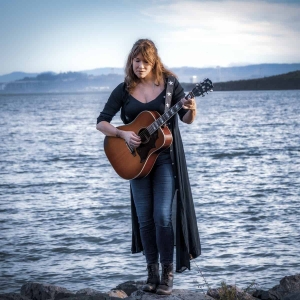 I released my first ever overtly political song – Lying Voices – on February 16 (yes, on President’s Day) and was shocked to find myself running headlong into a wall of censorship.
Written in the dark days after the 2024 election when millions of people like myself were shaken that so many Americans had chosen to re-elect a man we considered deeply unfit for office, the song asks, “Why did they believe those lying voices?”
 Although many factors were at play, the steady drip of propaganda and lies from right-wing media leading up to the election was, from my point of view, the most important influence on the election’s outcome. And whether you agree with my politics or not, it’s clear that outlets like FOX news — along with pro-MAGA podcasters and influencers – have essentially become the propagandistic arm of our current regime.
As both an American citizen and a former journalist, this alarms me. There’s a reason why journalism is often called the fourth estate and the idea of a “free press” was baked into our constitution in America. Suddenly any news outlet not reporting favorably on Trump and the current administration was being called an “enemy of the people,” with its chilling reverberations to Stalin and totalitarianism and/or getting sued.
And as I would soon find out, big tech was in on the fix.
I’ve released three albums of original music, but nothing prepared me for what happened when I released Lying Voices. It started out promisingly enough – I was thrilled when Americana Highways agreed to premiere the song on their site and then, a few days later, when a separate music site, Americana UK, said they wanted to premiere the music video. I’d worked hard on this song and had found fantastic players to back me up. Most importantly, the song expressed something I believed in and felt strongly.
In addition to announcing the premieres, I planned to promote the song and video on social media by “boosting” posts on Facebook and running short “teaser’ videos on Instagram and YouTube, both common practice for independent artists. I even hired a social media person to help me promote streams and followers on Spotify – something I’d never done before — by running ads on Google and Facebook to point people towards Spotify and YouTube.
Right away we ran into roadblocks.
The first thing we noticed was that posts about the song and the video were getting “shadow banned” on social media, a phenomenon I’d heard of but never experienced. It basically means no one sees your posts; they get buried by an invisible algorithm. Instead of the usual 40 or 50 likes and comments a post like this would normally evoke, there would be maybe one. And when friends of mine posted about the song, they had the same experience. I had the unnerving sensation of being made invisible by forces I could neither see nor confront.
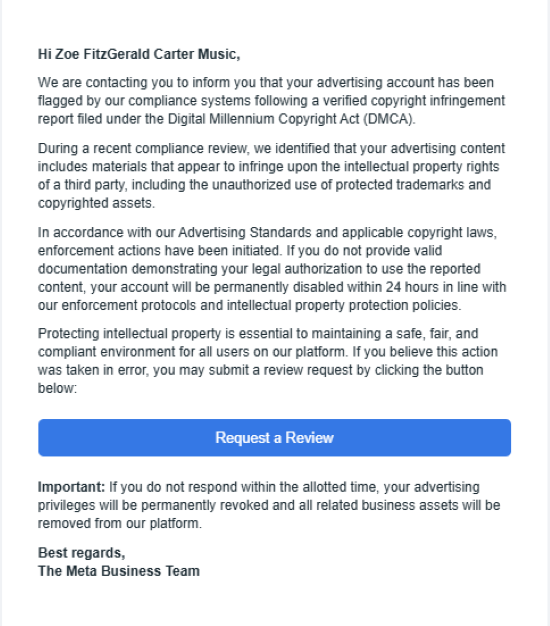
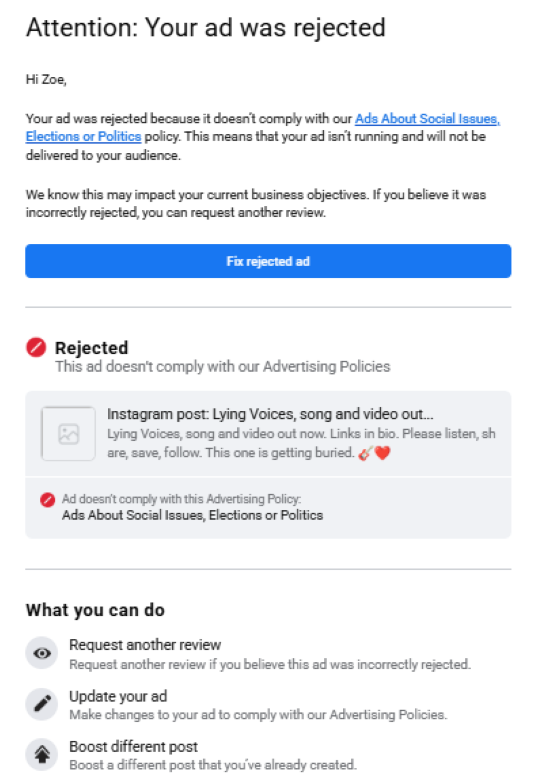
But shadow banning was just the warmup. When I attempted to buy ads on Google (which runs YouTube) and Meta (Instagram and Facebook), the ads were continually rejected. Initially, the reason given was that my content went “against community standards.” Then when I would ask for a review, I’d receive a scattershot array of other reasons. These included “Meta does not have the music rights,” (which is absurd because why would they?) to “May contain music that belongs to someone else” (it doesn’t).
I was also told that “Your ad doesn’t comply with our Ads about Social Issues, Elections or Politics” and “Your ad is disapproved due to Google Ads’ Election advertising in the United States.” (The election I was referencing happened a year before).
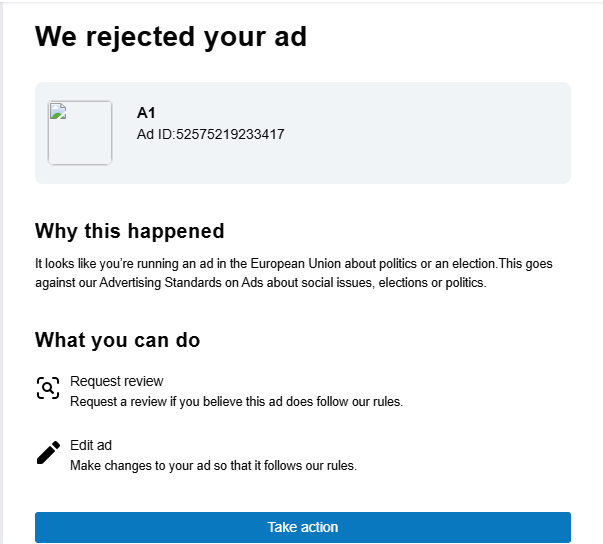
And then, “Your ad may have been rejected because it mentions politicians or is about sensitive social issues that could influence public opinion, how people vote and may impact the outcome of an election or pending legislation.” (hmmm…when did influencing public opinion get outlawed?) And finally, “Ads about social issues, elections or politics are not allowed to run in the European Union.”
I wasn’t running ads in the European Union.
I felt devastated. Yes, the song has some strongly worded lines – “You may be president but to us you’re just a joker and a wannabe king.” And “that dream of America, the one I had, that dream is dead.” And yes, I used the word “bullshit” in the chorus which earned it an “explicit” rating but lots of songs have stronger profanity in them and still get played.
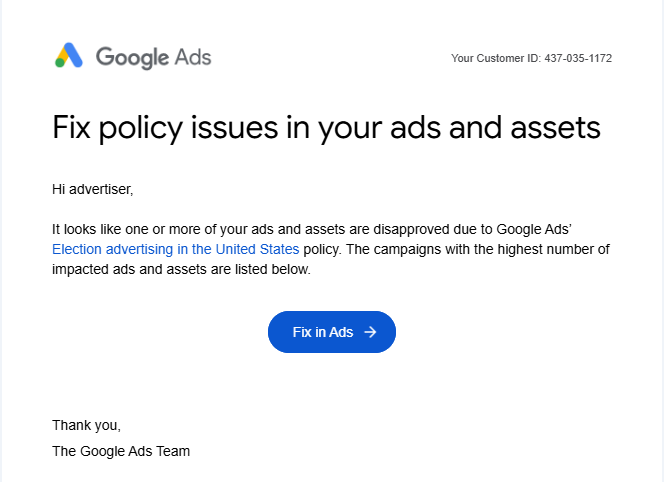
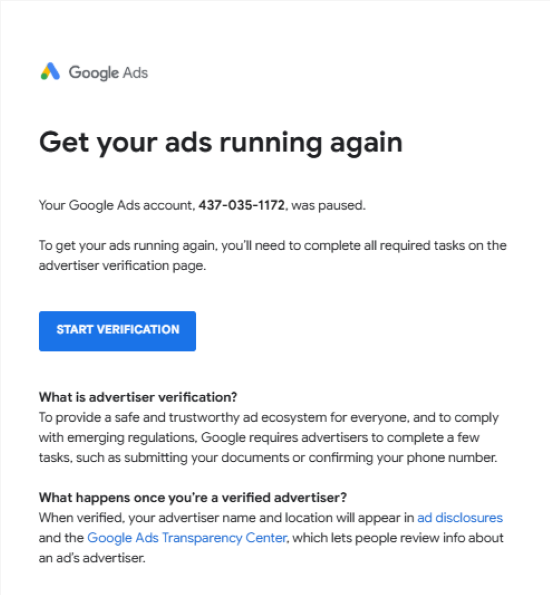
Even my very experienced social media expert said he’d never seen anything like it in all his years as a music promoter. As I scrambled to get the ads reviewed, I had to spend time proving that I was the one paying for them and uploading extensive personal proof of identification. Google even had a chilling sidebar that informed me that my unwillingness to comply with their guidelines could be “reported to government agencies.” And despite all my efforts to convince them that I was who I said I was and was paying for the ads, they STILL wouldn’t let me run an ad for the music video on YouTube!
Eventually, by stripping out any description of the song – why I wrote it, what it was about — I was able to engineer an ad on Meta that seems to have gotten past the censors and has directed at least some people over to Spotify. But the whole experience has been deeply discouraging and alarming. The former journalist in me wants to know if Google and Meta are censoring the “other side” with the same assiduous attention they paid to my song. Or is this a reflection of Meta and Google’s overlords “bending the knee” to Trump, only running algorithms that pick up “anti-Trump” sentiment among users on the platform, even paying users like myself.
 As any musician can tell you, writing and recording a song is a long and bumpy road. We put our hearts and souls into realizing a vision that usually starts out with us scribbling in a notebook while balancing a guitar on our laps, hardly dreaming that one day the world might hear our creation. It can take months to finance, organize, record, mix and master and release a song. And while I accept that this is the business I’m in and am grateful to do what I do, to have algorithms made by tech billionaires censor and “disappear’ my song makes me both angry and frustrated. To critique and even mock our political leaders has always been the right of writers, musicians and artists. But I am here to tell you that this right is not guaranteed.
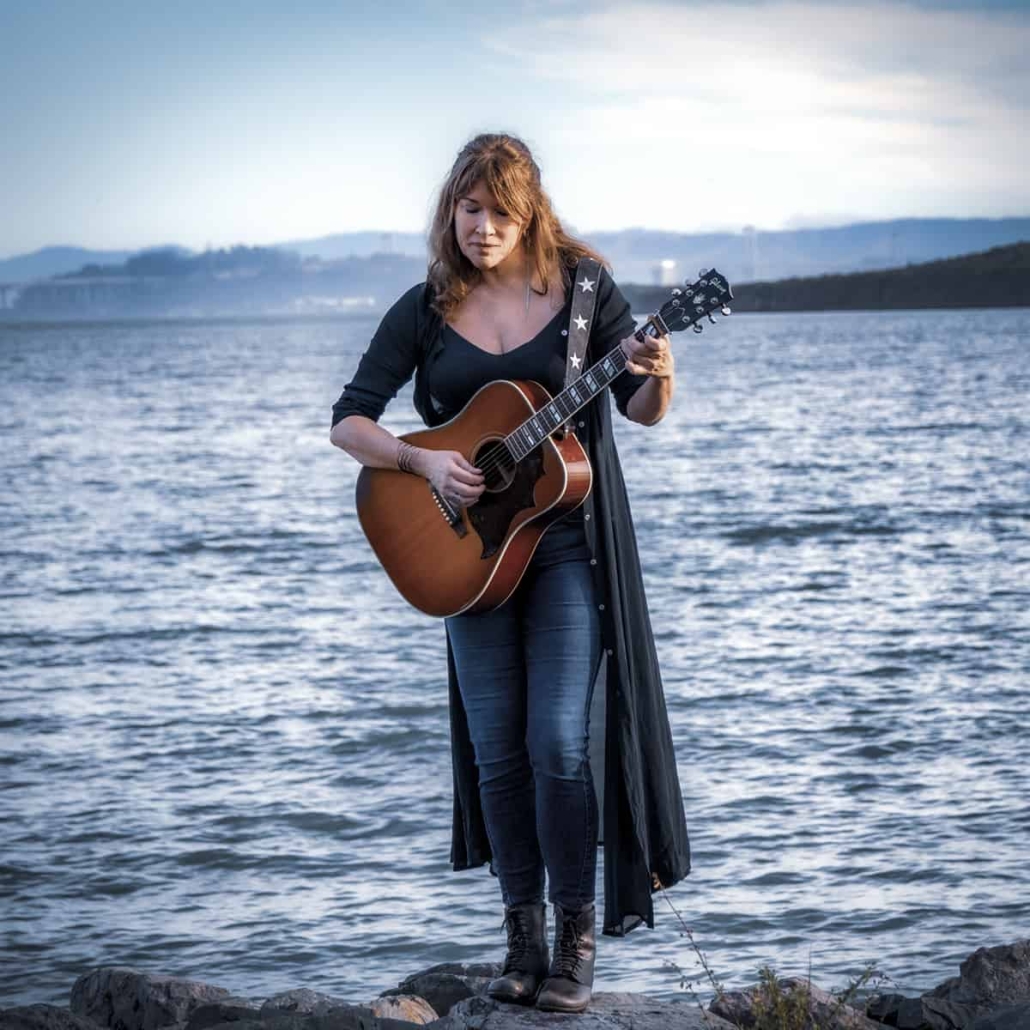
 Zoe FitzGerald Carter, author/journalist turned musician living in the San Francisco Bay Area. Her fourth album, Chaos By Design, comes out in September 2026. “Lying Voices” is a single from that album.
Where Protest Meets Censorship
How One Musician Discovered the Limits of Free Speech