
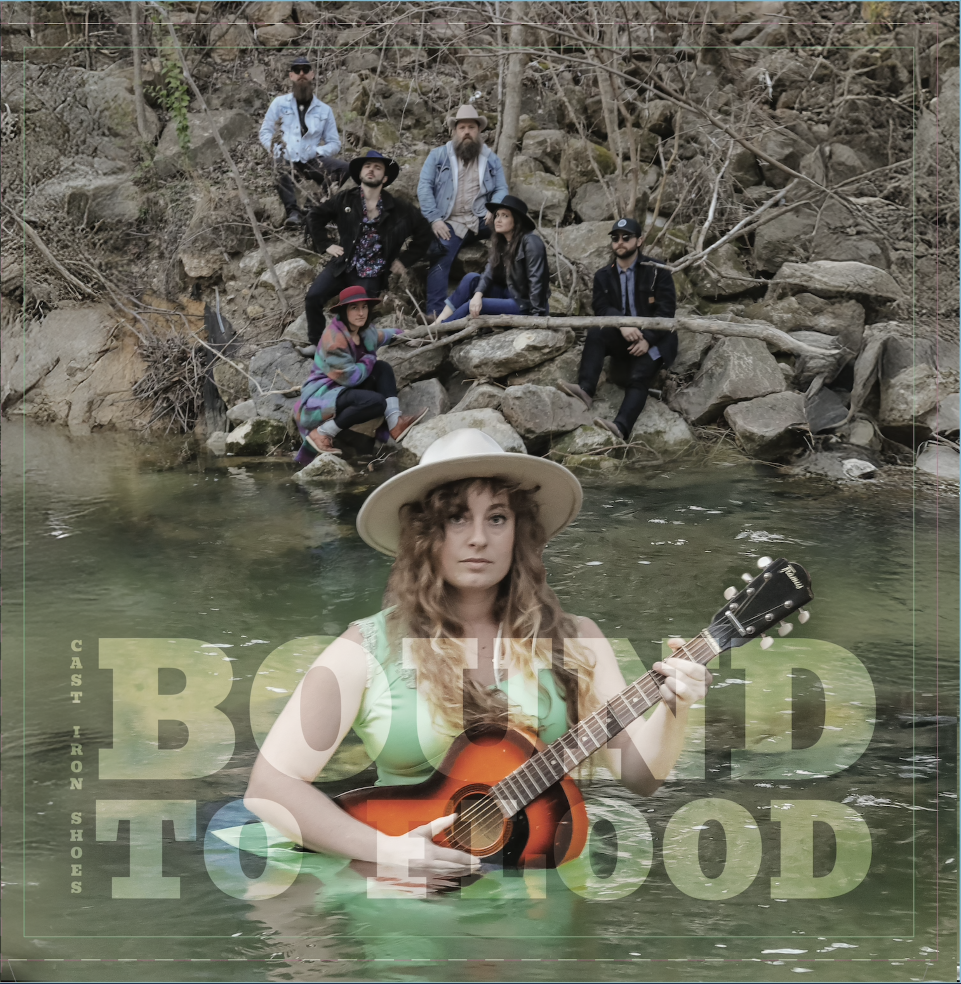
Cast Iron Shoes: Bound to Flood
Nicole Ridgwell talks about borders, wildflowers, reclaiming space, and her new album
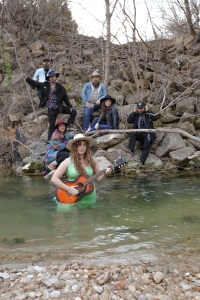 I don’t know what to call the music I like: Hard folk. Punk Folk. Death Folk. Americana with a sledge hammer. Strings, wood, and metal with a dusty floor and a bit of grunge. What makes it Folk is the story it tells: hard-luck and road-weary, living out of sheer spite. Real stories of real folks and all the uncomfortable furniture that entails.
Nicole Ridgwell connected with me because we’ll both be attending FAI 2026 in New Orleans, LA. One word in her email jumped out at me with a bounce and crazy eyes: ANALOGUE. I had to know more. Nicole asked only that I get to know her music before we talked, and I surely did.
Cast Iron Shoes makes a sound that soothes my mind – just edgy enough to feel mildly threatening, but soft enough to curl up and take a nap. You can decide if I’m describing my mind or the music. This is a place where truth is messy but irrefutable. Our conversation wove through vintage gear, honesty in art, our love of vinyl, AI music, the little death of promoting your own work, goals and what grows in the deepest parts of Texas. I’ll share some of that with you here.
me: I just told you I’m mad about half this music because it’s hitting me in all my breakup bruises. Now tell me about “Dragonfly.”
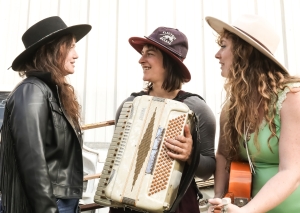
Nicole: God, I hopefully won’t hit you too hard in that particular bruise. I actually wrote it about my female best friend – my friend Nayoun – though it’s still a breakup song. I was having to move away…I don’t know, I think there’s a lot of romantic love interest songs and not enough love songs about your best friends, ones who stick with you through thick and thin. You know what I mean?
me: I understand that kind of breakup, yeah.
Nicole: So when I recorded “When I Leave This World” on Bound to Flood, Grace Daily came in from New Orleans to put accordion on the record. She saw my typewriter – I write a lot of songs on a typewriter. She got really into it, and she started writing songs on my typewriter. Then, when she went back to New Orleans, she got one for herself. She started sending me letters in the mail, typewritten letters. So we’ll send letters written on our typewriters back and forth to each other.
me: So she’s the one that plays the accordion on all your albums?
Nicole: Well, the first album, the self-titled one, I played every instrument on that. I self-produced everything. My buddy Luke Hogan engineered it; I recorded in his garage, so nobody else worked with me on that one. The machine we used was a Tascam 38 half-inch reel-to-reel tape machine. It’s funny, he’d mostly recorded grunge rock before Americana.
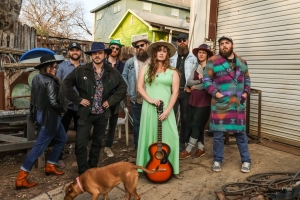 On Bound to Flood I have two accordion players. If you listen close, there’s an accordion that’s like New Orleans-style. That’s Grace Daily. And then there’s another accordion player that’s more conjunto; that is Josh Baca. Bound to Flood musically straddles the border between Texas and Louisiana. So I knew what I wanted, but I also really love accordion. So I needed them both. It was so extra to have two accordion players on your record.
me: You did need ’em both. Now where do you live?
Nicole: Grace lives in New Orleans, Louisiana; Josh lives in San Antonio, Texas. I live in Austin, Texas. Where do you live?
me: I’ve lived in New Orleans and in San Antonio. I currently live in Annandale, Virginia, but I’ve been trying to move. I knew right away I didn’t want to stay, but I stayed. And I’ve made a lot of good art in this place. Things will happen when they should. I believe that firmly.
Nicole: It’s interesting you’re talking about moving, because that’s probably the other big theme in this album. A lot of my songwriting is about escape and moving.
me: I very much noticed that. In fact, I shared your YouTube link with a friend. He wrote back, “Yeah, this sounds like you,” especially “Backslide,” since I have personal history in New Orleans. I had two babies there.
These songs are just me pissing me off from every direction – but in a good way. Really, it’s a badge of honor, especially if you talk to anybody that knows me personally. Tell them, “Deb got really pissed off at both my albums.”
Nicole: I’m so glad. The hardest thing for me as an artist is just to get the music that I make in front of people that like my kind of music, you know what I mean? People out there are into this stuff, but it’s wildly difficult. How do I inform the people that would like to go to a show like this that the show is happening? It seems so simple, but it’s hard.
me: You have a lot of death in your music. But I like that about it. Death is a very real part of the lifecycle, and I don’t see any sense in avoiding it as a topic.
Nicole: It doesn’t avoid us.
me: Exactly. One of the things I really like about your lyrics is that you use little things…like in “Junebug”:
I saw a Junebug / I saw a thunder cloud
and
I don’t need no big stage, no marquee with my name
I tell people that tangible items are where we hide our feelings. I found a lot of that in the items that you choose to mention make the scene physical so I can go there. Lots of dirt…I love dirt. And then there’s that grungy mix… So how did you decide you needed everything to be analog?
Nicole: I hate screens and I hate digital. I hate the fucking internet. And any time I tell people that, they say it’s useful and this and that, and I just don’t feel like it is.
I grew up in a trailer with no electricity, off-grid. We didn’t have running water and we were really poor. We didn’t have electric, I didn’t play video games; I played instruments, and I read books. That was my childhood: playing and climbing trees. I wasn’t even exposed to computers until I was a teenager in junior high and they had us do typing class. That was my first interaction with screens. So it’s always felt imposed on me and not natural. I’ve always gravitated towards real things, like things that I can touch. For example, you’ll never find synth in my music, you know what I mean? I want a honkytonk fucking piano. I like the sound of strings hitting wood.
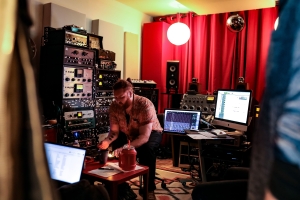 We tracked live on Bound to Flood. There were 13 musicians all in one room onto an Ampex MM-1200 Amex 16-track tape machine, which is two-inch tape. We were using vintage ribbon microphones and gear pushed past its limit to intentionally have too much energy.
Me: Yeah, I noticed. I noticed at one point that the vocals got a little hot, but it was great.
Nicole: It’s funny because the on first record, which I did by myself, I did that kind of accidentally. The nice thing about tape is when your vocals get too hot – I’ll sing really soft and then I’ll go kind of into a growl – if you’re recording digitally, it causes clipping, but with tape, you warp the tape. It sounds cool.
This one song we recorded on tape had certain parts where I just sang too hot into the microphone. We couldn’t really fix it. At that point, I was like, “I don’t know what to do.” It was the first thing I’d ever done, and the tape was fucked.
My good friend Claudia Gibson had worked with this guy, Aaron Glemboski. He’d engineered one of the songs on her first record back when he was working with Gordy Quist at his studio, The Finishing School.
I was having issues with my mix. Claudia said, “This guy’s amazing, and I think he can save your record.” And so she had me send the mixes to him to master it, and instantly I fell in love with this guy. He did whatever mastering magic thing he did. He kind of saved my first record. And that was when I knew that I had to make a whole record with him. I thought once I get some money together and I can actually hire some musicians to play with me, I want to work with this guy and I want him to be my engineer.
It’s important to me to produce my own songs. I’m really stubborn, and it pisses me off: every time a female musician releases music, people want to know who produced it for her. I don’t want to have that conversation. I made the music, I wrote the songs, I produced it. There’s not some guy puppet-mastering, pulling the strings that make it sound good. But Aaron is not the kind of person that just likes to hear himself talk. If he says something, it’s because it’s a great fucking idea.
And he loves analog. He loves rock and roll. He loves intentional mistakes and keeping things how they naturally are. He’s a master of knowing what microphone to use. My singing voice, it’s kind of raspy. So Aaron wanted a vintage mic: he mostly used an RCA 44 BX Ribbon mic.
So it’s got this warm kind of sound, like 40s radio. I sang one note into that thing and it was like, “Yep, that’s my microphone.” It didn’t make my voice sound different than what it was, but it just felt right. And I don’t know, I feel like you can hear every detail of the vocals.
 me: I think you can. “Sweatbucket” is a banger. What kind of guitar effects were used. What kind of guitars? How’d you get that piano sound?
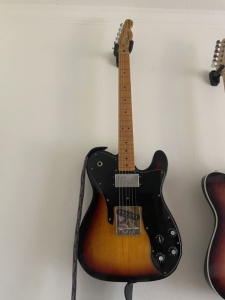
Nicole: The guitar is just cranking volume way up on a Blues Jr. amp – playing with the master and volume adds preamp grit – other than that I didn’t use pedals or effects. I played my Tele*; Max Sanders played his Strat, I believe. Piano was Alex Hartley. Honestly, we didn’t throw many effects on any of the songs. Any time Aaron tried to add effects I made him remove them (lol.) He tried to put an effect on my voice for that song and “Red Hand” and I vetoed it.
*Squier Classic Vibe ’70s Telecaster in 3‑tone sunburst with a wide range humbucker in the neck and an Tele bridge single‑coil
(here’s an unrelated but sweet little video featuring Max Sanders with Nicole Ridgwell)
me: The title track, “Bound to Flood” – I love that it starts out and ends with drums. How did you choose the title track?
Nicole: I knew I wanted the album called Bound to Flood, because drought/flood is to the land how feast/famine is to an addict. Too much/not enough relationships and substance abuse issues appear in almost every song on my album. Thematically, that song’s lyrics are a warning against the type of love you end up running from. The song sonically sits between the deserts of Terlingua and the swamps of Lafayette. It’s a border song: you have to cross borders to run away.
The idea of Bound to Flood has been sitting with me ever since I came to Texas on my first tour. We were in Abilene and stopped at the gas station. The attendant told us the town hadn’t seen rain in seven years because God was angry at them. Their lake was all dried up. Then as soon as we crossed the county line it started pouring rain. I wrote a song called “Abilene” about it years later but it didn’t really do the concept justice. I ended up writing multiple drought/flood songs; none of them felt like the one until I wrote “Bound To Flood.”
When I finished it, I knew it would be the title track. But it actually was the most difficult song to do the instrumentation for. I had no idea how I wanted it to sound – everything I tried was wrong. I thought it would be really swampy; but Aaron came up with the idea to bring that Spaghetti Western-style guitar tone and bring the desert into it and the whole song clicked into place. Max nailed it the first time he tried it we all got shivers up our spines.
It’s actually the only song on the album that I didn’t do all orchestration and instrumentation and production myself – we ended up using drums, bass, guitar, accordion, fiddle, and banjo. Aaron really put his stamp on it with that guitar tone. I think it makes the whole song.
(please enjoy this live version of “Bound to Flood.”)
me: You explain that the song “Abilene” didn’t nail the…concept? Feeling? Both? Head/heart negotiations? And what do you do when you make something nice, and people like it, but it isn’t what you were after. It’s the wrong whale…
Nicole: I think every song is what I’m capable of at that time. Sometimes they stay in my live set for years and sometimes they get replaced by new songs I’m excited about, or new iterations of the song that are clearer and make more sense. I think because of my background making films, I’m familiar with throwing things away and completely re-making them. I don’t mind if a song dies so its next reincarnation can be born.
“Abilene” is a great song that I care about, and though it’s been retired from my set, I think it still stands up well. It has a totally different tone and mood than “Bound to Flood.”
But in this context, I wouldn’t have been able to write “Bound To Flood” without first having written “Abilene.” Sometimes things take a few tries for me. I just am not so precious with my songs that they all have to be the best thing I’ve ever made. Sometimes it’s okay to be a stepping stone song.
me, aside: Nicole sent me “Abilene” so I could hear it. Concurrently, an artist I follow sent pictures of a very large, creepy artwork she’d decided to disassemble and reconfigure when it didn’t sell. It’s another side to the same concept Nicole’s talking about: What do we stewards of the creative secret universe do when the message we found doesn’t land with the audience? Save it for later? Reconfigure? Build another one, cross your fingers, launch? All of this, yes. We close our eyes and let the message speak to us. Sometimes I try another language: paint instead of poetry. Sometimes it gets filtered through another translator by collaborating or sending it off to another editor, another producer. Sometimes you just go plant a garden about it.
So I listened to “Abilene” again.
Nicole: I learned a lot between the first and second albums: The first album was at Luke’s house; the second and third ones were in a recording studio, Electric Deluxe, which is Adrian Quesada’s studio. Adrian Quesada is in the Black Pumas, and he is a super, super into really cool analog gear, and he makes a ton of really, really cool records at that studio. I was kind of intimidated, actually. I was like, shit, I guess I can’t sound bad in this studio.
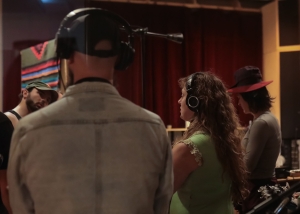
I got all my friends to record on the album, too. It’s hard to sound bad when you’re hanging out with your friends.
I do session work: I’ll play fiddle or sing vocals on other people’s projects and stuff, but honestly, it’s just different than performing live. I feel like performing live is like writing a poem. It’s spontaneous and it just comes out how it comes out. And recording is writing a novel. It’s like you got to plan it out and here’s the story arc…
Me: Let me tell you something about poems, though: A lot of people don’t feel like they get poetry because a lot of poetry is just the first draft. You can actually craft your poem and make it better. A lot of poets don’t want to hear that. They’re processing their emotions on paper and not appreciating the depth that poetry can have.
But I’m also the person who goes around telling people that I don’t respect poetry, and yet I work for a poetry publisher, designing books and covers. We’re publishing my book of poetry. At first it was like, “yeah, this is awesome. I can do it exactly the way I want.” But I have to look at my poems objectively now as the designer. Is where you chose to put the page number the best option for this book? Frankly, I’m sick to death of this project, but I still have to plan a book launch next month.
Nicole: It’s the same thing with releasing an album properly. I mean by the time it comes out, it’s like a year after you did it and you’ve already written a whole ‘nother albums worth of songs.
me: All I’ve wanted was to hear somebody else read my words. I wanted to be in the audience. I finally got what I wanted.
Nicole: It’s the coolest feeling.
me: Yes, it is. Melinda Smith was the first person to take one of my poems and say, “Would you mind if I put this to music?” I thought it would be the only song I write, so I found somebody that does lathe-cut vinyl singles. I wanted only song on a record.
Nicole: I’m so jealous. It must feel so cool to be able to hold your songs in your hand, be like, this is my song that I made. You can say, “Here’s my art right here. You want it?” I have my first record on CD, but it’s not the same.
me: It’s not the same. No.
Nicole: I put a vinyl onto the turntable and then I lay on my back on the floor, and there are these breezy curtains that move around on the window. I just listen to the whole side and then I turn it over.
me: It’s an ecosystem. You’re building a space.
Let’s talk about your song “Don’t Let Me Go Back.” I like being able to hear the room. It sounds like a midsize garage with a mid-level of garage-things stored in there. This track caused me to think a lot about mixer pre-sets where you can choose “concert hall” or “house concert” for the music you play on your own system. I understand somebody went through a lot of trouble to figure out how to make the computer sound like a concert hall or sound like an intimate venue, but does it really sound like a concert hall or does it sound like a cartoon of concert hall?
Nicole: I mean, I think it just goes back to what are you singing about? To me, I’m singing about what I have access to and what I don’t. If I don’t have access to a concert hall, it wouldn’t really make sense to make the mix sound like it’s in one. I’m not in one. And that’s lying.
Before I was a songwriter, I was a visual artist. I was an animator, I was a filmmaker, and I wrote stories. I’ve written screenplays, I’ve done all this shit. And I feel like anytime I’m working on anything, it’s only just me trying to be truthful to what that thing is. That thing already exists and it chose me to make it.
me: I say this all the time.
 Nicole: I don’t want to be trying to make it something that it’s not. That’s what happens to me in my life. I have felt like an outsider. I’ve felt like it’s always “you’re doing this the wrong way” or “you need to be like this,” or you need to change this part of yourself, or you don’t really fit in. I don’t want to do that to my songs. If this song is trying to be one way, I don’t want to try and force it to sound like it’s in a fucking concert hall.
Most of my songs are written about underdogs and underprivileged people that fucking bang their heads against brick walls trying to get a chance, because that’s been my experience in life. And so to make something polished would be defeating the point of my actions. Being alive is not polished; it’s messy and embarrassing and uncomfortable and violent and dirty.
And so that’s how my music sounds: because I grew up in the places where the dandelions grew through the cracks in the pavement next to the barbed wire fence. There was a sliding glass door into a trailer. Always liked the beauty of that.
me: You have to find beauty in what’s around you.
Nicole: My mom used to grow climbing roses on the side of the trailer. So in the springtime, the trailer was covered in these beautiful-smelling roses. A lot of people who live in trailers don’t garden; it’s kind of ironic, beautiful, kind of sad, kind of awesome. I don’t know.
My mom would carry wildflower seed; she would just throw seed by the side of the road. The next year that dirt patch in the spring would be covered in flowers. She could have just left the dirt patches being dirt patches. It didn’t benefit her to make them beautiful. But all of a sudden, everybody driving on the highway’s driving by flowers, something so sad and so beautiful. And those flowers will still be there after she’s gone. That highway will always have flowers. And I don’t know, there’s something so sad about that small act of making something more beautiful than it was before.
I feel like if she had the support, my mother could have pursued an arts profession, but instead she’s just made everything she touched a little more enjoyable, a little more beautiful. And I think that that kind of translates no matter where you are in your career, if you’re just doing art for fun or if you sometimes get paid for it, or if that’s how you pay your bills, or if you’re retired and you just want to do creative stuff, always wanted to, and nobody ever supported you. It’s all the same thing. It’s all just spreading wildflower seeds next to the highway.
me: Have you written that song yet?
Nicole: No.
me: I said earlier that your lyrics are very visual. Do you still do visual art?
Nicole: No, not at all.
me: By choice or just because you’ve been too focused on music?
Nicole: I stopped by choice. I worked in the film industry for seven years, animation for large corporations, which sucked the joy out of it. I thought I’d be able to exist in a corporate environment coming from where I come from and being who I am and being the kind of artist that I am. And I got pretty far and I was able to have an impact on some of the films, but it was hard for me to not try and make things better, to just be efficient.
me: Efficient. I’m glad you used that word. That part’s important.
Nicole: And it’s hard to get corporate performance reviews as an artist. If I get a shitty album review, I’m fine with that, but to have someone numerically rate my value to the company, as an artist, it hurts my feelings. I don’t want to be numerically rated. Even if you’re an employee making art on a cool movie, you’re still an employee.
My dad was a mechanic. He owned his own business. My mom grew roses and sold them at markets when I was kid. And I don’t know, they just always kind of did their own thing. And I think at some point I had to accept that I needed to do my own thing too. When I quit, I thought I would just take a break from art and eventually I’d start painting and drawing again; I have not. I’ve found real solace, and playing music feels safe. I’m in control of my music. If you don’t like my tunes, go to a different honkytonk; there’ll be another band playing.
I don’t need any corporate record label; I self-release my music. And that feels like power to me that I never had as a visual artist working for these big corporations. Yeah, I don’t know. I have a song I wrote recently, not recorded yet: “There are so many bars on this boulevard. You don’t have to sit here and listen to me.”
me: Oh, that’s nice.
Nicole: I don’t need people to like my music and I don’t need to climb this ladder. People have been asking me that a lot because doing a full release with Bound to Flood. With Cast Iron Shoes, my first album, I just put it out there. I was like, I have an album. I just want people to listen to it. But this one, I’m gonna do all the releasing things and send it to DJs and stuff like that. And people are like, well, what’s your goal?
When they do that, I answer: My goal is to make a record.
I think goals are very overrated. They say we need them and we should always be striving towards these things and “where do you see yourself in five years?” How about where do I see myself now? What do I enjoy about my life? What am I proud of that I already did this year? Why are we sitting down making New Year’s resolutions for all the things that we could do better next year? How about at New Year’s we sit down and list everything we did fucking awesomely this last year and pat ourselves on the back?
I did a whole bunch this year, and it might not be the shit that everybody else wants me to do or thinks that I should do or thinks that I could be more successful at, but I’m proud of it. I worked hard. Everybody offers some kind of constructive criticism: This is how you can get better. Maybe I don’t want to get fucking better. Maybe I just need a compliment. Maybe I just need you to say, “Good job, Nicole. You have value.”
me: They’ve rephrased the real question, which is: What are you doing that we could monetize? Where are you going to be in five years? Do you have aspirations we can take advantage of and possibly bring you along with it? It feels predatory.
Nicole: When I worked in the film industry, and at the point that I quit the film industry, I was in the middle of pitching a mini-series to Netflix about a girl who becomes a songwriter. And so I had tangible, very intense goals. I wanted to be a showrunner. Now with music, there are things that I see in my future, but it’s more spiritual.
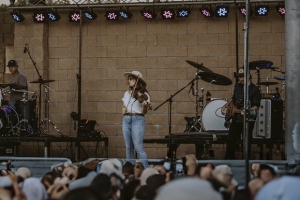 When I went to Red Rocks this last tour – well, I was recording with Mark Anderson at Cowboy Cowabunga, which is right next to Red Rocks – and I went and I just sat there looking at the stage, like, wow, maybe someday I could. It looks so small. That looks like the kind of stages I play on all the time. And it was so wild to think that because I think the maximum size stage that I played is a 2,000 cap in Kansas or something, not anywhere close to 9,000, but it was so inspiring and cool, very non-corporate, non-my goal-in-the-next-five-years is to gain this many followers, which translates to this percentage of fans that would fill a stadium like Red Rocks so that I can play at Red Rocks.
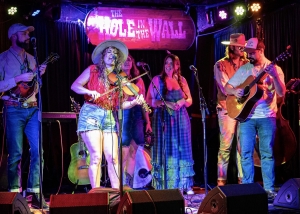
It was just that place and the rocks and the stage and the kind of people that have played there, and it just filled my body with, I don’t know, electricity. So I don’t know if that’s a goal, but it’s not a goal. Goals make you sad when you don’t accomplish them.
I remember turning 30 and being so mad about all my goals that I wanted to hit by the time I was 30 but didn’t; I was so depressed I didn’t celebrate my birthday. That was a turning point where I was quitting. I quit the film industry. I quit my job. I put all my stuff in a car with my dog, and I just started driving away from California, and I just kept driving until I reached South Carolina, and I didn’t know where I was going to move or stay or anything.
In that transition point was a lot of grief and sadness; I always wanted to be a songwriter, and I always wanted to be a band leader, and I never had the confidence. I was always playing backup. I would play fiddle in other people’s bands and sing backup vocals, and I just felt like I would never be as good as the songwriters that I worked with. And the thing is, it doesn’t really matter how good you are. It’s process.
It’s the work that you put in every day. If you want something to be good, it usually ruins the act of making it, and it’s not that fun anymore. Once I let that go and I didn’t need to be better than other people, then all of a sudden when I get criticism, it doesn’t hurt that bad. I don’t really mind if you don’t like this song. I wrote five more last week.
With quantity, you just keep putting in the work. If you keep writing songs, your songs will get better automatically.
You spend one year writing the perfect song, and if that song’s not perfect… I would rather be at the end of the year and have written 50 songs that are progressing and teaching me and doing the work than make one.
Because I did that with film. I spent five years making one story. It was such a heartbreak. I never finished that story. At the end of those five years, I had to give it up. I’d rather make small songs and let them be imperfect and keep the tape scratch and the fucking vocals bleeding into the guitar and the mistakes and all of that, and just let it be a mistake.
The whole need to evaluate everything, I think, has made music sound perfect now. And that’s why AI can dupe. The only reason we have AI music being able to make it is because it’s become so perfected that it sounds like a computer. If your music’s not perfect or if you’re performing it live in a room with your fingers and your voice – those mistakes, and it just being what it is and not needing to be impressive to other people has been a journey for me, I think. It’s freed me up to find a little bit of joy instead of being miserable.
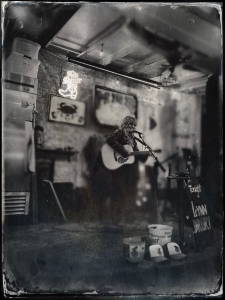 me: Yep. Mistakes are what make things beautiful.
Nicole: My mom always told me mistakes are what makes something look handmade.
me: I am hoping and praying that handmade wins out after all. People will realize, eventually. Tell me about “Pennies on your Doorstep.” The strumming goes so hard and the vocals felt soft.
Nicole: I almost didn’t put that on the record. So that’s the epitome of what I was talking about as far as imperfect goes.
me: You do everything live, so vocals and guitar each get their own microphone?
Nicole: Yeah, there’s a bleed that happens when you do it that way, and that’s kind of come around to bite me in the ass. I’ve started trying putting songs in films. It’s tough when you record the way I do because you have to take the vocal track out so they have an instrumental track. I’m having to figure out ways around it so I can still record the way I want, but have the option to give people a track that doesn’t have vocals. That song, for example, would be really tough.
That song is really raw and about a really traumatic experience, and it doesn’t really fit with the other songs on the record that much. It’s just its own song and kind of lives in its own space. I’ve had a lot of discussions about whether I should cut that song and just release it as a single because it’s so intense.
me: Yeah, no, I think it was a good idea to put it on there. It is intense, but then you move on to other things that are less intense, so the listener gets a chance to breathe after that.
Nicole: When people sometimes ask, “Do you have any murder ballads?” I don’t have any murder ballads, but I have the premeditation part: “I’m going to murder you. I haven’t done it yet, but it’s coming.”
me: That resonates. I get to that point and never actually murder anybody, so I like that.
Nicole: If you’ve got pennies on your doorstep, it means somebody’s trying to fix you. I was living in South Carolina and somebody said, “I’ve got pennies on my doorstep.” So I learned what that means: someone’s putting a curse on you.
me: South Carolina’s got some excellent superstitions that I’m assuming kind of trickled over from the Gullahs and Geechees. When I lived in New Orleans, I had a Cuban roommate who practiced Santería, so I know a little bit more of that stuff. The things you can normalize when your life brings you something and you have no choice but to listen.
My blog usually focuses on working as a musician and a visual artist, because I got a lot of mixed information growing up. My grandma was an artist, and so she encouraged that in me. But people would always ask, “What are you going to do for a career though?”
If somebody feels like a creative, I want them to know that yes, you should do that. I want anybody who’s raising children to tell them, “You will have more than one career. Let one of them be your passion. Yes, you can do the thing you want to do.”
Nicole: That’s always been my experience. I think I sold my first painting when I was 12 or something. I started teaching music lessons and playing on the street, like busking. I started sneaking into the art schools and drawing, and then I got internships at these animation studios. I always supported myself as an artist. I worked in some coffee shops and stuff, but always either teaching music, teaching art. I performed at kids’ birthday parties, and now I’m a full-time musician and I don’t do visual art at the same time, but I always had those two careers going at the same time, art and music. And I would lie in the music world, I wouldn’t tell people I was an artist.
me: That! Isn’t it interesting?
Nicole: Nobody knew I was a musician. Well, the first time this last tour I did in California with my band, I performed at Pixar, and this is the first time I’ve been back to Pixar since I quit.
We performed on stage, and I was there as a musician and not as an employee, as an animator. It was the coolest experience, and everyone was so happy for me. They said things like, “oh, this makes so much sense. You seem so much happier.” And it was the first time too that I was able to be my full volume. I have a loud voice. I don’t know if you can tell over Zoom, but I had to make my voice less loud. It was too loud and it would disrupt things, and I took up too much space.
So when I went back with my band, we were amplified. We had a fucking Telecaster. I screamed, I yelled during my set and I had this feeling of: Oh, this is what it feels like to be my full self in this building.
And it took me a long time to get myself to the point where I could be this volume.
As a person who’s sometimes too big for the space, I get it. Make sure you follow Cast Iron Shoes on Youtube and Instagram @castironshoes so you’ll know where Nicole Ridgwell has landed. It’s sure to be somewhere interesting, maybe prickly and dry, and surely bound to flood.
I’ll leave you with the same last words Nicole gave me: Don’t forget you can fly.
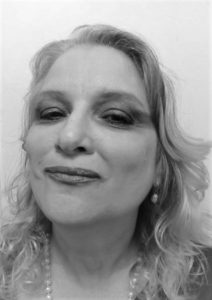
debora Ewing writes, paints, and screams at the stars because the world is still screwed up. She improves what she can with music collaboration, peer-review at Consilience Poetry Journal, or designing books for Igneus Press. Follow @DebsValidation on X and Instagram. Read her self-distractions at FolkWorks.org and JerryJazzMusician.com.
Cast Iron Shoes: Bound to Flood
Nicole Ridgwell talks about borders, wildflowers, reclaiming space, and her new album